
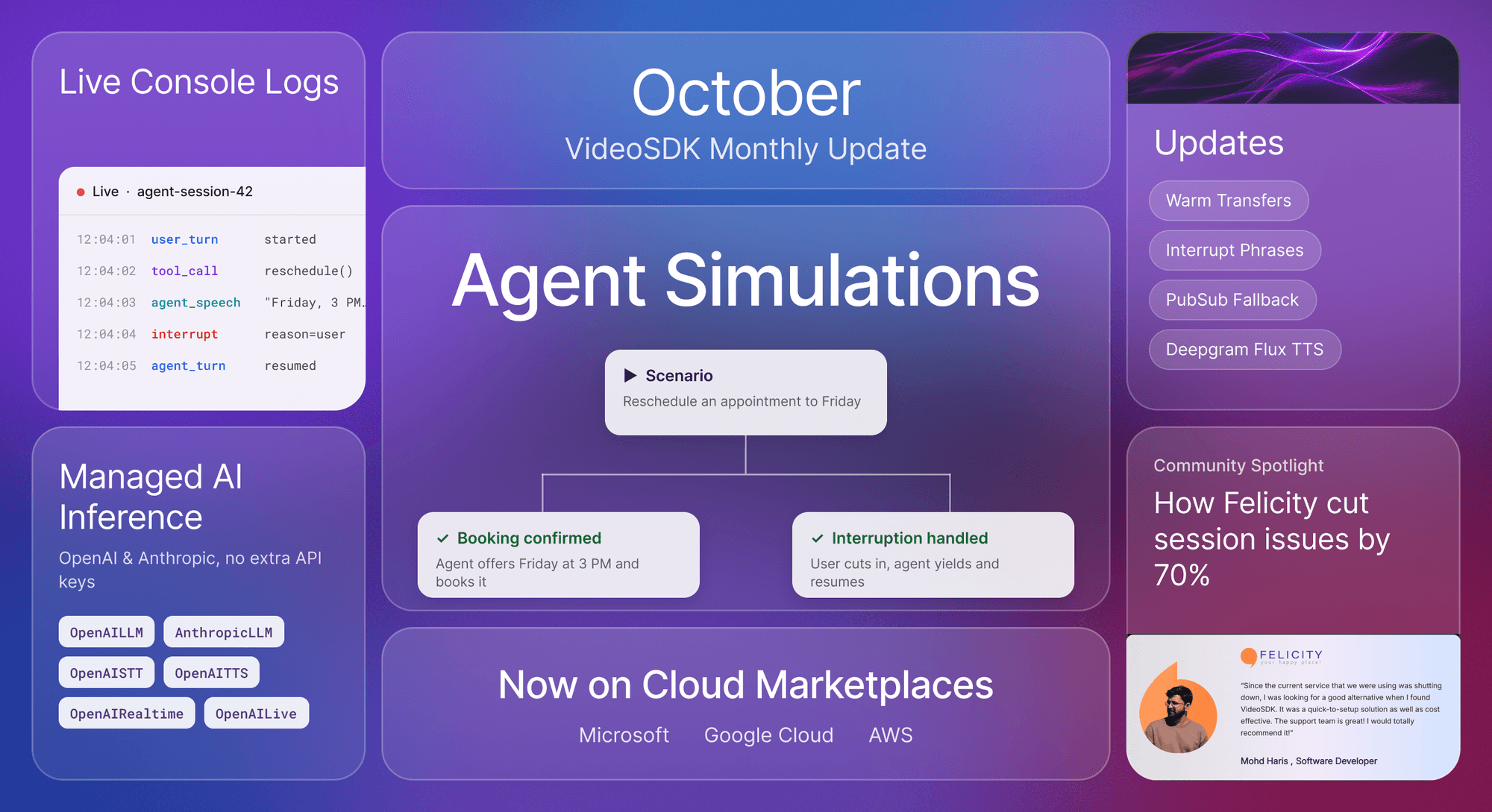


October 2026 Updates: Introducing Simulations, expanded managed inference, improved agent observability, and more resilient real-time communication.
October brings new ways to test and operate voice AI agents with ZeroRuntime, alongside reliability improvements across VideoSDK's JavaScript and React SDKs. From running agent simulations and accessing managed AI models to inspecting session traces and handling PubSub reconnects, here's what you can start using this month.
Introducing Simulations for AI Voice Agents
Testing a voice agent shouldn't depend on repeatedly placing live calls. Simulations give you a dedicated way to test agent conversations and inspect their behavior as you develop and refine your application.
You can work with simulations in two ways, depending on how you build your agents:
From the ZeroRuntime Dashboard
Use the Simulations dashboard to access the simulation workflow through the web interface. For an introduction to the feature, see the Simulations overview.
From the Runtime SDK
If your agent is developed and deployed through the Runtime SDK, simulations are also part of that developer workflow. See the Runtime SDK Simulations guide for the deployment-oriented path.
Whether you prefer the dashboard or an SDK-led workflow, the goal is the same: make agent testing a more deliberate part of development before changes reach live conversations.
Managed OpenAI and Anthropic Inference in ZeroRuntime
ZeroRuntime Python SDK v0.1.9 expands managed inference with OpenAI and Anthropic integrations. Instead of configuring a separate provider API key for each supported component, you can use ZeroRuntime-managed inference for language, speech, and real-time model workflows.
The new integrations include OpenAILLM, AnthropicLLM, OpenAISTT, OpenAITTS, OpenAIRealtime, and OpenAILive.
The update also brings current model defaults and provider behavior into the SDK, including Anthropic prompt caching by default and updated OpenAI voice model configurations. Explore the Anthropic inference models, OpenAI speech-to-text models, and GPT-Live guide.
Introducing Live Console Logs and Improved Agent Traces
When a conversation behaves unexpectedly, the fastest route to a fix is understanding what happened inside the session. ZeroRuntime's new Console support sends live logs, events, and traces alongside metrics, bringing more of that context together while an agent runs.
We've also improved how traces represent a conversation. User turns and agent turns are recorded separately, agent speech is attached to the relevant turn or tool call, and interruption details include timing and reasons. That makes it easier to follow the sequence of events when you're debugging tool responses, speech interruptions, or turn handling.
These updates make it easier to inspect an agent session as it unfolds, from individual user and agent turns to tool calls and interruptions.
More Control Over Agent Conversations and Warm Transfers
Real-world conversations rarely follow a perfect script. Users interrupt, an agent needs to hand off a call, or the conversation needs information from a knowledge base. October's ZeroRuntime updates give developers more control over these moments.
More configurable warm transfers
Warm transfers now separate the consultation between an agent and supervisor from the original customer call. The consultation can have its own recording, metrics, and traces, while the original call transcript stays focused on the customer conversation.
With ZeroRuntime Python SDK v0.1.9, you can also configure the consultation room and optionally set hold_message and failure_message for what the caller hears during the handoff.
Interruption phrases and knowledge base retrieval
The new interrupt_phrases option lets specific short responses interrupt the agent even when they fall below the usual minimum-word threshold. ZeroRuntime Python SDK v0.1.9 also adds asynchronous knowledge base retrieval with an observability hook, making retrieval easier to integrate and monitor.
More Reliable PubSub in JS SDK v1.2.1 and React SDK v1.2.0
PubSub is often the part of a real-time application that developers expect to keep working quietly in the background-until a reconnect, blocked Web Worker, or meeting shutdown gets in the way. October's JS SDK v1.2.1 and React SDK v1.2.0 releases focus on making these failure paths predictable.
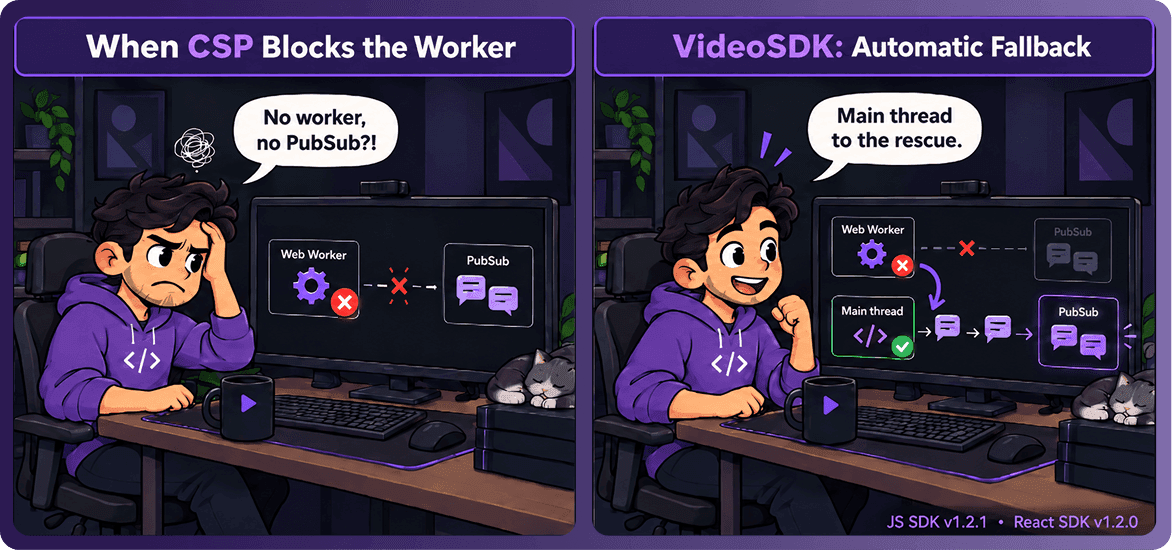
If the PubSub Web Worker cannot start-for example, because of a Content Security Policy restriction or worker loading issue-PubSub now automatically falls back to the main thread for the session. Reconnect handling is more robust, too: a failed topic resubscription no longer disrupts unrelated requests on a healthy connection, and events from an old socket don't interfere with the new connection.
After a meeting ends, pending or new publish, subscribe, and unsubscribe operations now reject with ERROR_OPERATION_ABORTED (3056) rather than silently remaining pending. Errors also identify the affected operation, topic, and cause, helping developers distinguish a timeout from a connection failure.
Implementation note: If a message was sent just before a meeting closed, it may still have been delivered even if its acknowledgment never arrived. Take that possibility into account when implementing retries.
For the full list of changes, see the JavaScript SDK release notes and React SDK release notes.
Additional SDK and Voice Pipeline Improvements
We've also shipped smaller fixes across WebView support and voice integrations. React SDK v1.2.0 improves participant.captureImage() in WebViews that require a user gesture for media playback, and avoids unnecessary webcam disable attempts when no webcam producer is active.
On the voice side, VideoSDK Agents SDK v1.0.34 introduces Deepgram Flux API support for text-to-speech, along with additional options for voice context and expressivity. Later releases improve streaming tool calls, OpenAI speech integrations, and audio handling during interruptions. Together, these changes reduce the amount of edge-case handling developers need around common voice agent workflows.
VideoSDK Is Now Available on Cloud Marketplaces
VideoSDK is now listed on Microsoft Marketplace, Google Cloud Marketplace, and AWS Marketplace, giving teams additional ways to discover and access VideoSDK through the cloud ecosystems they already use.
Read more about each listing:
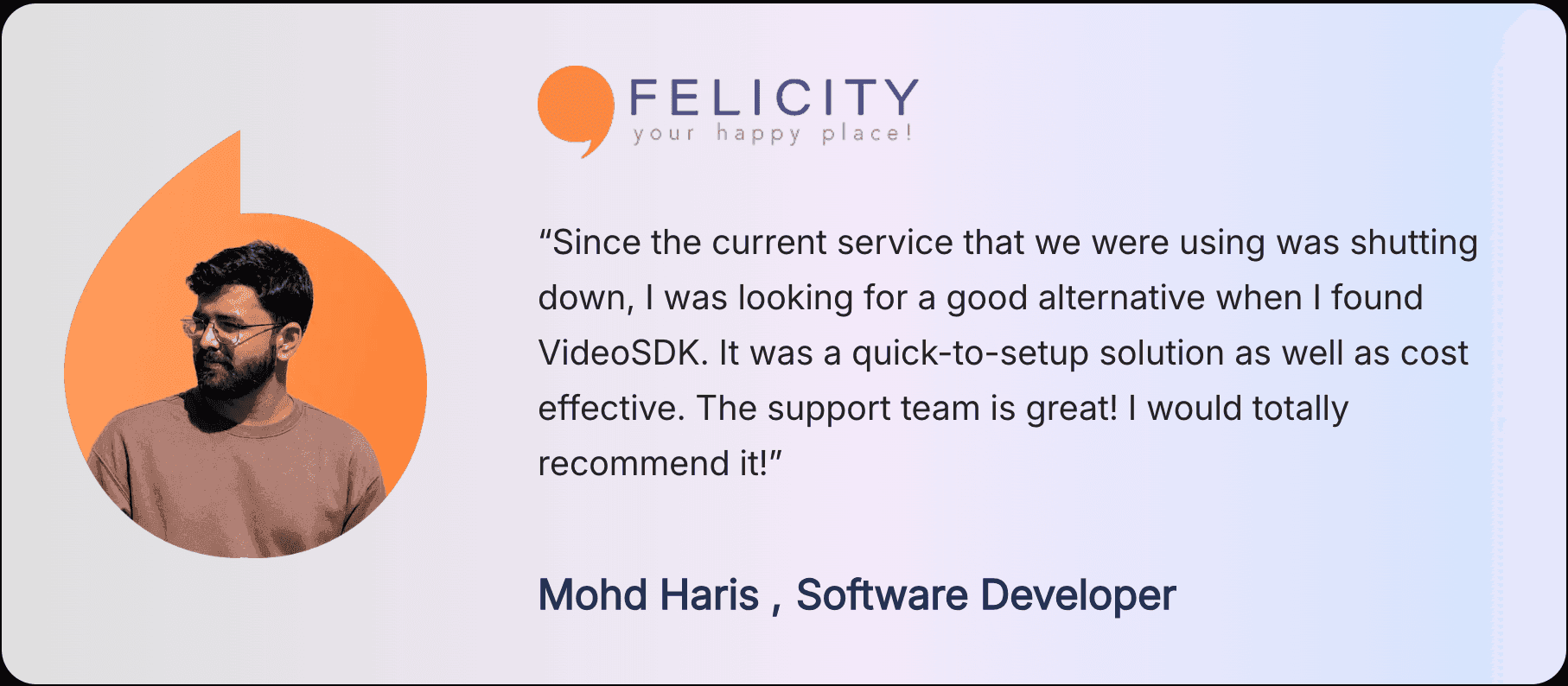
✨ Community Spotlight
SDK Sketches
What happens when a PubSub Web Worker can't start? In this month's SDK Sketches, we look at the difference between a messaging flow that stops at a blocked worker and one that falls back to the main thread.
Start Building with October's Updates
Try Simulations from the ZeroRuntime dashboard, explore the managed inference and conversation-control updates in ZeroRuntime Python SDK v0.1.9, or update to JS SDK v1.2.1 and React SDK v1.2.0 to pick up the latest PubSub fixes.
Build with October's Updates
Explore the latest SDK releases, test your agents, and share feedback with the developer community.
Happy building!
Team VideoSDK