


Dynamic Range Compression: Enhance Audio Quality for Modern Applications
Dynamic range compression is a foundational audio processing technology that enables businesses to deliver clear, balanced, and consistent audio experiences across diverse platforms. By reducing the disparity between the loudest and quietest parts of an audio signal, dynamic range compression ensures listeners enjoy optimal clarity without frequent volume adjustments. In 2026, organizations in media, communications, and customer engagement rely on dynamic range compression to elevate user experience and maintain a competitive edge. VideoSDK provides advanced tools for seamless integration of this technology, empowering teams to deliver superior audio quality in real time.
What is Dynamic Range Compression?
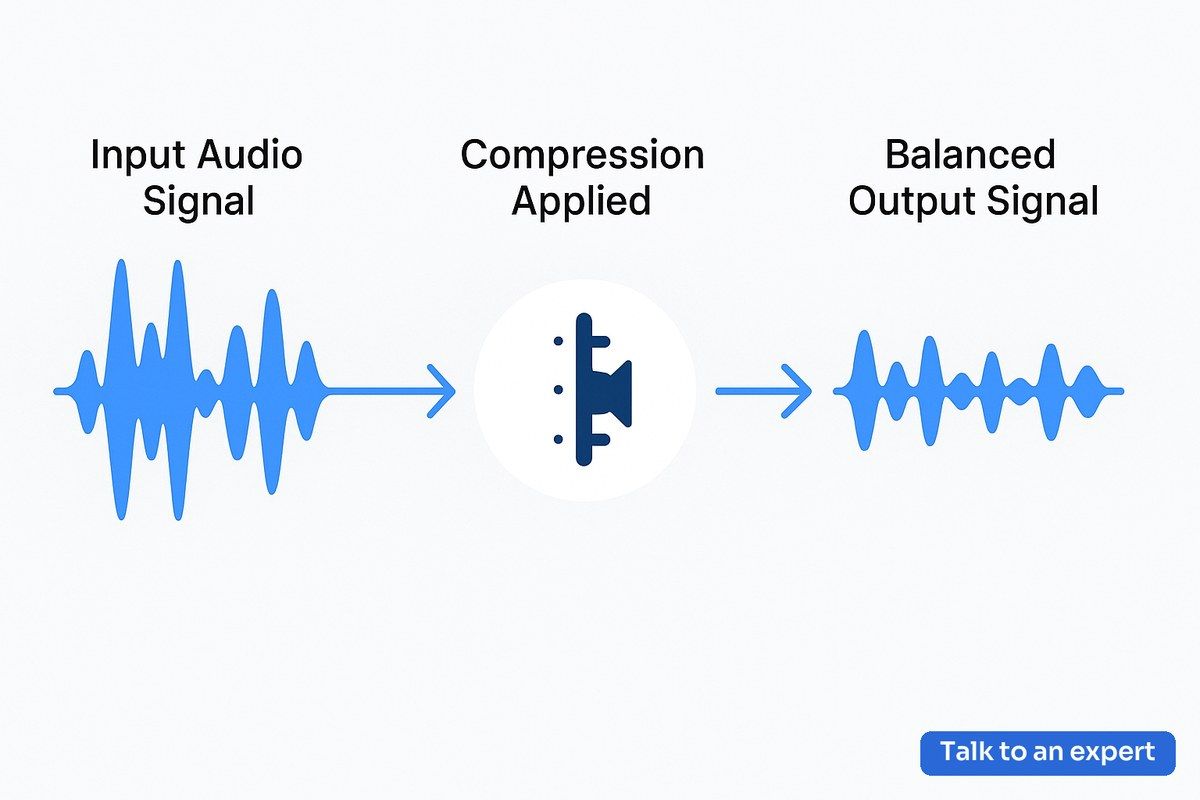
Dynamic range compression is an audio processing technique that reduces the difference between the loudest and quietest parts of an audio signal. By controlling this dynamic range, it maintains consistent audio levels, enhances clarity, and prevents distortion or sudden volume spikes. This makes audio more manageable and enjoyable across different playback environments, from streaming services to live broadcasts. Dynamic range compression is essential for delivering professional-grade sound quality, especially in scenarios where audio consistency is critical.
How It Works
Dynamic range compression operates by automatically adjusting the amplitude of audio signals. Specialized processors, called compressors, analyze incoming audio and apply gain reduction to loud sounds while optionally boosting quieter passages. The process is governed by key parameters:
- Threshold: The level above or below which compression is applied.
- Ratio: Determines how much the audio is compressed once it exceeds the threshold.
- Attack and Release Times: Control how quickly the compressor responds to changes in signal level.
There are two primary techniques:
- Downward Compression: Reduces the volume of sounds above a set threshold, making loud sounds quieter.
- Upward Compression: Increases the volume of sounds below a threshold, making quiet sounds louder.
Compressors and limiters are vital tools in this process. A compressor provides smooth, transparent control of audio dynamics, while a limiter acts as a safeguard to prevent the signal from exceeding a maximum level, protecting both audio quality and playback equipment. Modern digital audio systems, including those powered by VideoSDK, offer precise control over these parameters, enabling tailored audio experiences for every application.
Practical Applications
Dynamic range compression is indispensable across industries where audio quality and consistency matter. Its applications span streaming services, broadcasting, live events, and customer service platforms, ensuring users receive clear, intelligible audio regardless of environment or device. Leading organizations leverage dynamic range compression to:
- Deliver consistent audio levels across diverse content types
- Enhance intelligibility in noisy environments
- Prevent distortion and protect playback hardware
- Optimize audio for mobile, desktop, and smart devices
Streaming Services
In streaming, dynamic range compression ensures that viewers enjoy a seamless listening experience without abrupt volume changes. Whether users are watching action films, documentaries, or podcasts, compression maintains a steady output, reducing the need for manual volume adjustments. This is especially valuable in mobile and smart TV environments, where background noise can impact clarity. Research from Google Cloud highlights the importance of adaptive audio processing for user retention in streaming platforms.
Broadcasting
Broadcasters depend on dynamic range compression to deliver clear, uniform audio to audiences, regardless of original recording conditions. Live broadcasts, news, and sports events often feature unpredictable audio dynamics, making compression essential for maintaining a professional sound. Compression also ensures regulatory compliance for loudness standards, such as EBU R128 or ATSC A/85, which are critical in global media distribution.
Live Events
During live events like concerts, conferences, or sports games, dynamic range compression manages the wide range of audio levels produced by different sources. It enables sound engineers to provide audiences with balanced, immersive sound, enhancing the overall experience. Compression also protects sound systems from unexpected peaks that could cause distortion or equipment damage.
Contact Centers and Voice Applications
In customer service and contact centers, dynamic range compression improves the clarity of agent and customer voices, even when background noise or variable speaking volumes are present. This leads to better communication outcomes and higher customer satisfaction. Integrating an Audio Denoising Plugin further refines audio by removing unwanted noise, complementing the benefits of compression.
Dynamic Range Compression vs. Related Approaches
| Technique | Purpose | Example Use Case |
|---|---|---|
| Dynamic Range Compression | Balances audio levels for clarity | Streaming services, podcasts |
| Equalization | Adjusts frequency balance | Music production |
| Limiting | Prevents audio from exceeding a threshold | Live sound reinforcement |
Equalization
Equalization (EQ) is a technique used alongside dynamic range compression to shape the tonal balance of audio. While compression manages the volume range, EQ adjusts the relative levels of different frequency bands. For example, in music production, EQ can highlight vocals or reduce harsh frequencies, while compression ensures overall loudness remains controlled. Combining both techniques allows engineers to achieve clarity and presence in complex mixes. Microsoft Research has explored advanced EQ and compression algorithms for real-time applications.
Limiting
Limiting is a specialized form of dynamic range compression with a high ratio, typically used to prevent audio from exceeding a set threshold. In live sound reinforcement, limiters act as a safety net, stopping unexpected peaks that could cause distortion or damage equipment. While both compression and limiting control audio dynamics, limiters are designed for maximum protection, whereas compressors offer more nuanced control over the entire dynamic range.
Implementation Considerations for Developers and Product Teams
Implementing dynamic range compression with VideoSDK requires a strategic approach to ensure optimal results:
- Assess Audio Needs: Analyze the specific requirements of your application, such as target audience, device types, and typical listening environments.
- Utilize VideoSDK Tools: Leverage VideoSDK's suite of features to integrate compression seamlessly. Incorporate Silero Voice Activity Detection to distinguish speech from background noise, optimizing compression performance.
- Test and Optimize: Continuously evaluate audio output, experimenting with different compression parameters (threshold, ratio, attack, release) to achieve the best balance.
- Monitor and Adjust: Use AI voice Agent Session Analytics to monitor real-world performance and make data-driven adjustments.
Workflow Integration
Integrating dynamic range compression into existing workflows requires careful planning, especially for real-time or large-scale applications. Developers should consider:
- The nature of the audio content (speech, music, mixed media)
- Expected variations in input levels
- Device and platform constraints
- User expectations for audio clarity and consistency
VideoSDK's modular architecture allows teams to deploy dynamic range compression alongside other audio enhancements, such as denoising and voice activity detection, for a comprehensive solution. Testing in real user environments is crucial to avoid over-compression, which can result in a lifeless or unnatural sound.
Challenges and Solutions
A common challenge is over-compression, which can flatten audio dynamics and reduce listener engagement. To address this, teams should:
- Set moderate compression ratios and carefully choose thresholds
- Use sidechain processing to prioritize important audio elements (like speech)
- Regularly review analytics to ensure natural-sounding results
Advanced analytics from VideoSDK help teams identify problem areas and fine-tune compression settings for different scenarios, supporting continuous improvement.
Connecting Dynamic Range Compression to VideoSDK Voice AI
VideoSDK's Voice AI capabilities supercharge dynamic range compression by offering real-time audio processing, intelligent analysis, and adaptive control. Features like AI voice Agent Sessions empower developers to manage and optimize audio interactions on the fly, ensuring exceptional sound quality across all use cases.
Real-Time Processing
Real-time audio processing is essential for interactive applications such as live broadcasts, virtual meetings, and gaming. VideoSDK's Voice AI tools enable immediate adjustments to compression parameters based on changing input levels or environmental conditions. This ensures that audio remains clear, balanced, and free from distortion, even in dynamic, unpredictable scenarios. NVIDIA AI Resources demonstrate the growing importance of real-time audio enhancements in next-generation media applications.
Advanced Analytics
Leveraging advanced analytics, product teams can gain actionable insights into how dynamic range compression impacts audio quality and user experience. Metrics such as speech intelligibility, loudness consistency, and background noise suppression can be tracked and optimized over time. This data-driven approach enables continuous refinement, helping businesses deliver industry-leading audio performance.
Industry Context and Future Trends
In 2026, dynamic range compression remains at the forefront of audio innovation. The proliferation of immersive experiences, such as virtual reality, augmented reality, and spatial audio, demands precise control over audio dynamics. Dynamic range compression is pivotal for creating engaging, lifelike soundscapes that adapt to user context and device capabilities.
Industry leaders are integrating artificial intelligence and machine learning to develop adaptive compression algorithms that respond in real time to changing audio environments. These advancements enable more personalized, context-aware audio experiences. According to Gartner, AI-powered audio processing is transforming digital media and communications, making dynamic range compression a critical component of future-ready solutions.
As regulatory standards for audio loudness and quality continue to evolve, businesses must stay agile, adopting flexible tools like VideoSDK to remain compliant and competitive. The future will see dynamic range compression integrated with other AI-driven audio enhancements, delivering seamless, high-fidelity sound for every user and application.
Conclusion
Dynamic range compression is a cornerstone technology for businesses seeking to improve audio quality and user experience in 2026. By leveraging VideoSDK's advanced tools, organizations can implement dynamic range compression efficiently, ensuring their audio content stands out in a competitive landscape. Embracing dynamic range is essential for delivering exceptional listening experiences and maintaining leadership in the evolving audio industry.
FAQ