


Introduction
Imagine a world where utility companies can predict outages before they occur, respond to customer inquiries instantly, and optimize energy distribution with unmatched precision. In 2026, the utility sector faces mounting pressures to enhance customer satisfaction and operational efficiency. The answer lies in embracing digital transformation, with conversational AI at the forefront.
The conversational AI benefits in utilities are profound, driving solutions to the industry's most urgent challenges. From transforming customer interactions to streamlining operations, conversational AI is not just a technological upgrade, it is a strategic imperative. By enabling utilities to deliver faster, more personalized service and optimize internal workflows, conversational AI positions utility companies for long-term success. This article explores the transformative potential of conversational AI in utilities, providing a practical roadmap to harness its benefits.
Understanding Conversational AI
Conversational AI is an advanced technology that enables machines to interact with humans in natural language, both spoken and written. It combines natural language processing (NLP), machine learning, and intelligent virtual assistants (IVAs) to interpret and respond to human language in real time. Unlike traditional customer service technologies that rely on scripted interactions, conversational AI offers dynamic, context-aware responses that improve user experience and engagement.
In the context of utilities, conversational AI powers chatbots, voice assistants, and automated support channels that can handle a wide range of customer and operational queries. This technology is rapidly evolving, with leading providers like Google Cloud Research and Microsoft Research driving innovation in natural language understanding and automation. When planning conversational ai benefits in utilities, align stakeholders on data privacy, workflow design, and clear escalation paths.
Conversational AI is also designed to learn and adapt over time. By analyzing historical data and user interactions, these systems continuously improve their responses, ensuring that utilities stay ahead of changing customer expectations. This adaptability is crucial for utilities, where customer needs and regulatory requirements are constantly evolving. With the ability to integrate with various communication channels, conversational AI ensures consistent and seamless experiences across web, mobile, and voice platforms, further enhancing its value in the utilities sector.
The Current Landscape of Utilities
The utility sector is grappling with several persistent challenges, including maintaining customer satisfaction, modernizing aging infrastructure, and enhancing operational efficiency. As customer expectations rise, there is increasing demand for seamless, digital-first interactions and rapid problem resolution. At the same time, utilities must optimize resource allocation, manage regulatory pressures, and adapt to new energy sources to remain competitive. For organizations exploring conversational ai benefits in utilities, the priority is measurable ROI and practical deployment.
Digital transformation is no longer optional, it is essential for survival. Utilities are under pressure to modernize legacy systems, improve reliability, and deliver superior customer experiences. Conversational AI emerges as a critical component of this digital strategy, enabling utilities to meet and exceed customer expectations while streamlining operations and reducing costs.
Additionally, the utilities sector faces growing complexity due to the integration of renewable energy sources, distributed energy resources, and the need for real-time grid management. These factors increase the volume and complexity of customer and operational interactions. Conversational AI provides a scalable solution, allowing utilities to efficiently manage these complexities while maintaining high standards of service and compliance. As the industry continues to evolve, adopting conversational AI becomes a key differentiator for utilities seeking to lead in a competitive market.
Benefits of Conversational AI in Utilities
The conversational AI benefits in utilities are multi-faceted, impacting both customer-facing and internal processes.
Improved Customer Service
Conversational AI revolutionizes customer service by offering 24/7 availability, ensuring that customers can access support whenever needed. AI-powered chatbots and virtual assistants deliver personalized interactions, tailoring responses based on customer history, preferences, and real-time context. This significantly enhances user satisfaction and builds trust.
By reducing wait times and improving first-contact resolution, conversational AI ensures that customer queries are addressed promptly and effectively. Automated systems can handle billing inquiries, outage reports, and service requests, freeing human agents to focus on complex or sensitive cases. This not only boosts customer loyalty but also optimizes resource allocation, allowing utilities to deliver higher-quality service at scale.
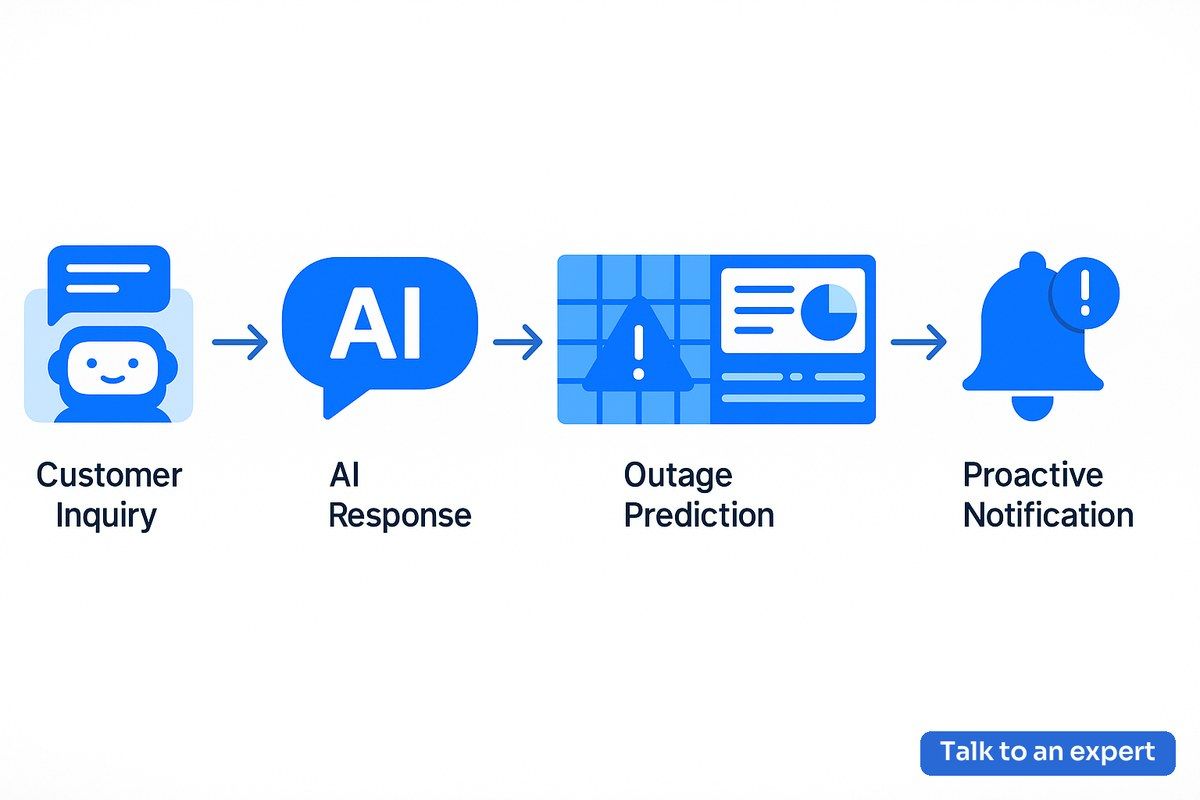
Conversational AI also enables utilities to proactively communicate with customers about outages, maintenance schedules, and energy-saving tips. These proactive notifications help reduce inbound inquiries during service disruptions and empower customers with timely, relevant information. Furthermore, AI-driven self-service options allow customers to resolve issues independently, increasing satisfaction and reducing operational strain on call centers. The result is a more agile, responsive customer service model that meets the demands of today’s digital-first consumers.
Operational Efficiency
Conversational AI plays a pivotal role in reducing operational costs by automating routine tasks such as billing inquiries, outage notifications, and meter readings. This automation allows utilities to allocate resources more efficiently, focusing on strategic initiatives rather than repetitive work. Leaders evaluating conversational ai benefits in utilities often start with one high-volume workflow before scaling further.
AI-driven predictive maintenance and real-time data analysis help utilities identify potential issues before they escalate, minimizing downtime and ensuring consistent service delivery. For example, AI can analyze sensor data from smart grids to predict equipment failures and proactively schedule repairs. This proactive approach saves costs, reduces manual intervention, and enhances the reliability of utility services.
Moreover, conversational AI can facilitate internal communications and workflows. Intelligent virtual agents can assist field technicians by providing instant access to technical documentation, troubleshooting guides, and real-time updates on equipment status. This support streamlines maintenance processes, reduces errors, and accelerates issue resolution. As a result, utilities can achieve greater operational agility, minimize service interruptions, and maximize the value of their workforce.
Practical Use Cases
The practical applications of conversational AI in utilities are expanding rapidly, delivering tangible value across the sector.
Case Study: E.ON's AI Integration
E.ON, a leading utility company, has successfully integrated conversational AI to automate customer service processes and enhance interactions. By deploying AI-powered chatbots, E.ON has reduced operational costs and improved customer satisfaction. The chatbots handle routine inquiries, allowing human agents to focus on complex cases, thus improving service quality.
E.ON's AI systems also support multilingual interactions and can escalate urgent issues to human agents when needed, ensuring a seamless customer experience. This case demonstrates how conversational AI benefits in utilities can drive both efficiency and customer loyalty.
E.ON’s experience also highlights the scalability of conversational AI solutions. As customer volumes fluctuate, AI-powered systems can automatically adjust to handle increased demand without compromising service quality. This flexibility is particularly valuable during peak periods, such as billing cycles or widespread outages, when customer inquiries surge. By leveraging conversational AI, E.ON has established a resilient, customer-centric service model that adapts to changing business needs.
Other Examples
Several other utility companies have adopted conversational AI to streamline operations and improve customer interactions. For instance, energy providers in North America have implemented AI-driven virtual assistants to manage outage notifications, payment processing, and service requests. These companies report significant improvements in response times, reduced call volumes, and higher customer satisfaction scores, underscoring the strategic value of AI in the utility sector.
Conversational AI is also being used to support energy efficiency programs, guide customers through enrollment in renewable energy plans, and provide personalized energy usage insights. By delivering targeted recommendations and educational content, AI-powered solutions help utilities foster stronger relationships with customers and promote sustainable energy practices. For those looking to implement similar solutions, the Voice Agent Quick Start Guide provides an excellent starting point for deploying conversational AI in utility environments. In practice, conversational ai benefits in utilities works best when integrated with existing CRM, telephony, and support tools.
ROI and Cost Considerations
Implementing conversational AI in utilities offers a compelling return on investment. The cost savings from automating high-volume, repetitive tasks, coupled with improved customer retention, translate into significant financial benefits. Utilities can also reduce the need for large call center teams, lowering operational expenses while maintaining or improving service quality.
While the initial investment in conversational AI solutions may be substantial, the long-term savings and enhanced service quality justify the expenditure. Utilities can expect reduced operational costs, increased efficiency, and enhanced customer loyalty, making conversational AI a wise investment for forward-thinking organizations. Industry research from McKinsey highlights that digital transformation, including AI adoption, is a key driver of profitability and resilience in the utility sector.
In addition to direct cost savings, conversational AI can generate new revenue streams by enabling utilities to offer value-added services. For example, AI-powered platforms can facilitate the upselling of energy management tools, smart home devices, or green energy plans. By leveraging customer insights and predictive analytics, utilities can identify opportunities for cross-selling and personalized offers, further increasing ROI. The scalability of conversational AI ensures that these benefits grow as customer engagement expands, maximizing the long-term value of AI investments. For organizations exploring conversational ai benefits in utilities, the priority is measurable ROI and practical deployment.
Implementation Challenges and Solutions
Despite its clear benefits, deploying conversational AI in utilities presents several challenges, including data security, integration with legacy systems, and change management. Utilities must ensure that customer data is protected and that AI systems comply with industry regulations.
Integration with existing IT infrastructure can be complex, especially for organizations with aging systems. However, these barriers can be overcome with strategic planning and best practices. Understanding the AI voice Agent core components overview is crucial for seamless integration.
Collaborating with technology partners who specialize in AI implementations can mitigate these challenges, ensuring a smooth transition to AI-powered solutions. Robust data security measures, staff training, and clear communication strategies are essential for successful adoption.
Change management is another critical factor. Employees may be resistant to new technologies or uncertain about how AI will impact their roles. Utilities should invest in comprehensive training programs, transparent communication, and ongoing support to foster a culture of innovation. Involving staff in the implementation process and highlighting the benefits of conversational AI can help build buy-in and accelerate adoption. By addressing these challenges proactively, utilities can unlock the full potential of conversational AI and drive sustainable transformation. Teams that adopt conversational ai benefits in utilities typically measure success through faster response times and lower handle costs.
Future Trends in AI for Utilities
Looking ahead to 2026 and beyond, the utility sector can expect further advancements in AI technology. Emerging trends such as smart grids, the Internet of Things (IoT), and edge computing will augment AI capabilities, offering even more sophisticated solutions for utilities.
AI-powered systems will enable real-time monitoring, automated demand response, and predictive analytics at scale. These advancements will further enhance operational efficiency and customer satisfaction, solidifying AI's role as a cornerstone of utility innovation. The AI voice Agent deployment process will be integral in adapting to these future trends, enabling utilities to stay ahead of the curve.
Another emerging trend is the integration of conversational AI with advanced analytics and machine learning models. This will enable utilities to deliver hyper-personalized experiences, anticipate customer needs, and optimize grid operations with unprecedented accuracy. As AI technologies become more accessible and affordable, even smaller utility providers will be able to leverage these innovations to compete effectively. The ongoing evolution of conversational AI will drive continuous improvement, ensuring that utilities remain agile and responsive in a rapidly changing landscape.
Conclusion
Conversational AI presents a transformative opportunity for utilities, offering significant improvements in customer service and operational efficiency. As the utility sector navigates the challenges of digital transformation, embracing conversational AI benefits in utilities becomes increasingly critical.
The VideoSDK platform provides the tools and framework necessary to integrate conversational AI seamlessly. By adopting these technologies, utility leaders can enhance customer satisfaction, optimize operations, and drive growth. It is time for utilities to embrace AI and lead the charge in digital innovation. For ongoing monitoring and improvement, leveraging AI voice Agent Session Analytics will be essential. The future of utilities lies in harnessing the full spectrum of conversational AI benefits, ensuring a resilient, customer-focused, and efficient industry for years to come.
Step-by-Step AI Voice Agent Quickstart
FAQ