


Introduction
AI-driven communication is rapidly transforming the way businesses connect with customers and stakeholders. Understanding how does AI call work is now essential for organizations aiming to modernize their communication strategies and gain a competitive edge. AI calls use advanced speech technologies and intelligent automation to deliver efficient, personalized, and scalable interactions. This article explores how does AI call work, the underlying technology, and the strategic business value AI calls bring in 2026 and beyond.
In simple terms, an AI call works by using artificial intelligence to understand spoken language, interpret intent, generate relevant responses, and communicate naturally with callers. This enables businesses to automate conversations, handle routine inquiries, and provide seamless support at scale. As AI technology continues to advance, organizations are leveraging these capabilities to enhance customer experiences, reduce operational costs, and drive innovation in communication workflows.
The Evolution of Communication: From IVR to AI Calls
Communication technology has evolved dramatically from the early days of Interactive Voice Response (IVR) systems to today's sophisticated AI-powered calls. IVR systems, once the backbone of automated customer service, were limited to basic menu-driven interactions and required rigid, manual programming. These systems often led to customer frustration due to their lack of flexibility and natural interaction.
The emergence of AI calls marks a pivotal shift. AI-driven calls leverage machine learning and natural language processing to engage in dynamic, context-aware conversations. Unlike static IVR, AI calls can understand complex language, adapt to a caller's needs, and learn from each interaction. This evolution empowers businesses to deliver more human-like, engaging experiences while improving operational efficiency and customer satisfaction. According to Gartner's research on conversational AI, the adoption of AI-driven communication is accelerating, with enterprises prioritizing customer-centric automation solutions.
AI-powered calling solutions have also made it possible to support multilingual interactions, recognize emotional cues in speech, and personalize responses based on historical data. This is a significant leap from IVR, which could not adapt to the nuances of human conversation. The shift to AI calls is not just about automation, but about creating intelligent, responsive, and empathetic communication channels that align with the expectations of modern consumers. As a result, businesses are seeing higher customer satisfaction scores and improved loyalty.
How AI Calls Work: The Technical Breakdown
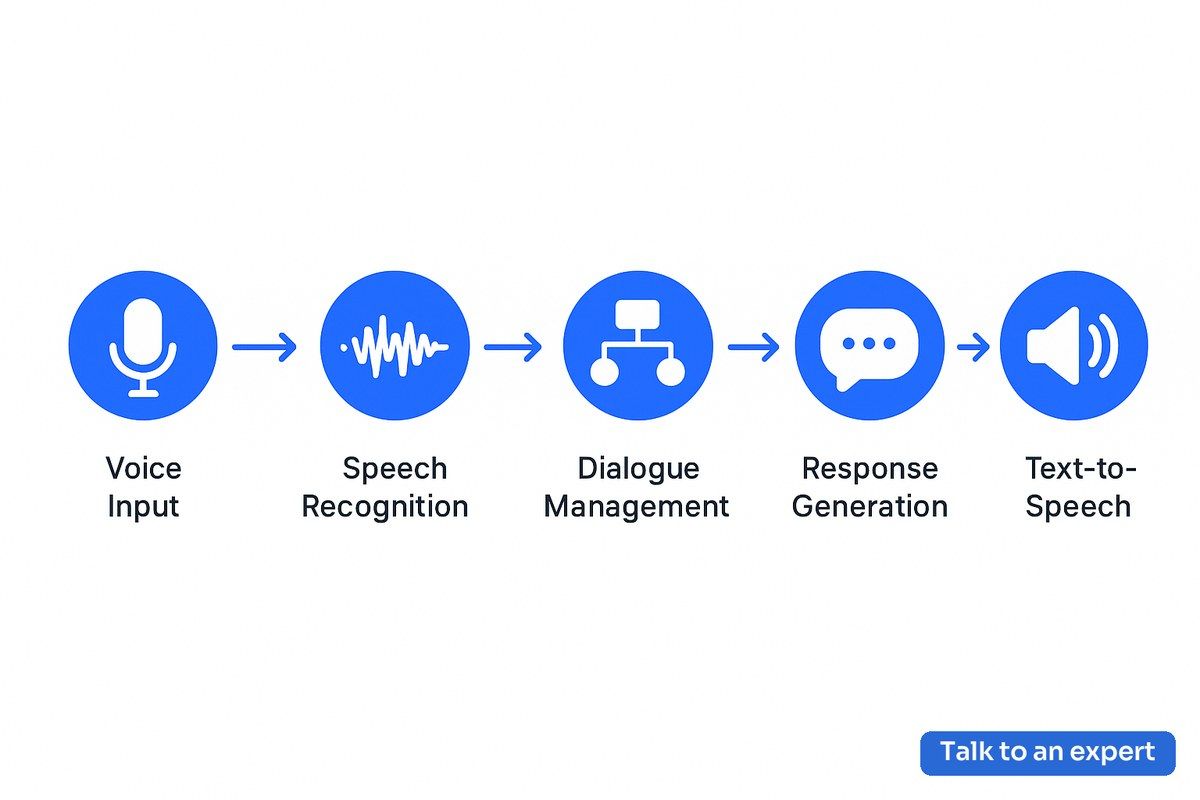
To understand how does AI call work, it's important to break down the core components that power these intelligent conversations:
- Automatic Speech Recognition (ASR): Converts spoken words into text, enabling the AI system to process and analyze what the caller says.
- Natural Language Understanding (NLU): Interprets the transcribed text to identify intent, context, and meaning, allowing for more accurate and relevant responses.
- Dialogue Management: Manages the flow of conversation, tracking context and ensuring the AI responds appropriately to each input. This enables multi-turn interactions that feel natural and coherent. Learn more about conversation flow management.
- Natural Language Generation (NLG): Crafts responses in natural, conversational language tailored to the situation and the caller's needs.
- Text-to-Speech (TTS): Converts the AI-generated response back into spoken words, completing the conversational loop.
These components are powered by advanced machine learning and deep learning models, which continuously improve through exposure to new data and user interactions. The integration of these technologies allows AI calls to deliver seamless, real-time conversations that mimic human agents. For a comprehensive overview, see the AI voice Agent core components.
In 2026, AI calls are further enhanced by cloud-based infrastructure, robust APIs, and real-time analytics. These advancements ensure high reliability, low latency, and the ability to scale AI calling solutions globally. Leading providers like Google Cloud and Microsoft Azure are investing heavily in AI-powered voice solutions, accelerating innovation and adoption across industries.
The technical backbone of how does AI call work also involves continuous learning. AI systems are trained on vast datasets containing different accents, languages, and conversational styles. This training enables the AI to recognize subtle variations in speech, detect sentiment, and even predict user needs based on context. Furthermore, AI calls can integrate with backend systems to fetch real-time information, such as order status or account details, making interactions more relevant and actionable. The result is a highly adaptive communication channel that can evolve alongside business requirements and customer expectations.
Practical Use Cases of AI Calls in Business
AI calls are reshaping business operations across multiple domains by automating and enhancing voice interactions. Here are some of the most impactful use cases:
- Customer Service: AI calls handle common inquiries, troubleshoot issues, and provide instant support, reducing wait times and freeing human agents for complex cases.
- Sales and Lead Qualification: AI voice agents can initiate outbound calls, qualify leads, and schedule appointments, enabling sales teams to focus on high-value prospects.
- Appointment Scheduling and Reminders: Healthcare, finance, and service industries use AI calls to automate appointment booking, reminders, and follow-ups, improving efficiency and reducing no-shows.
- Order Processing and Status Updates: Retailers and logistics companies deploy AI calls to confirm orders, provide shipping updates, and resolve delivery issues.
- Surveys and Feedback Collection: AI calls can conduct automated surveys, gather customer feedback, and analyze sentiment at scale.
The business impact of these use cases is substantial, driving cost savings, improving customer satisfaction, and enabling 24/7 service.
AI calls are also being used in industries such as insurance for claims processing, in hospitality for reservation management, and in utilities for outage notifications and billing inquiries. By automating routine and repetitive tasks, organizations can reallocate human resources to more strategic initiatives. Additionally, AI calls can be programmed to escalate complex or sensitive issues to human agents, ensuring that customers always receive the appropriate level of support. This hybrid approach maximizes efficiency while maintaining a high standard of service.
| Traditional Calling Solutions | AI-Powered Calling Solutions | |
|---|---|---|
| Manual interaction required | Automated, intelligent responses | |
| Limited hours of operation | 24/7 availability | |
| High operational costs | Cost-effective and scalable | For organizations exploring how does ai call work, the priority is measurable ROI and practical deployment. |
Organizations looking to implement AI calls can start with the Voice Agent Quick Start Guide for practical deployment steps.
Benefits of AI Calls: The Business ROI
The adoption of AI calls delivers a compelling return on investment for businesses in 2026. Key benefits include:
- Cost Efficiency: Automation reduces the need for large call center teams, lowering operational costs and enabling businesses to scale without proportional increases in headcount.
- Scalability: AI calls can handle thousands of simultaneous conversations, supporting business growth and seasonal spikes without service degradation.
- Enhanced Customer Experience: Fast, accurate, and personalized responses improve satisfaction and loyalty. AI calls can remember previous interactions, providing continuity and context.
- Actionable Insights: AI calls generate rich data on customer behavior, preferences, and pain points. Analytics tools, such as AI voice Agent Session Analytics, help businesses optimize their communication strategies.
- 24/7 Availability: AI calls ensure customers can reach your business anytime, improving accessibility and responsiveness.
These benefits are validated by industry research from McKinsey and NVIDIA AI Resources, highlighting the transformative impact of AI-powered voice solutions on business outcomes.
Another significant advantage is the ability of AI calls to provide consistent service quality. Unlike human agents, AI does not experience fatigue or emotional fluctuations, ensuring every customer receives the same high level of service regardless of time or call volume. AI calls can also be rapidly updated with new information, such as product launches or policy changes, ensuring that customers always receive accurate and up-to-date responses. This agility is crucial for businesses operating in fast-paced or highly regulated industries.
Moreover, AI calls can help businesses identify emerging trends and customer needs by analyzing call data at scale. These insights can inform product development, marketing strategies, and customer support initiatives, driving continuous improvement across the organization. By leveraging the full capabilities of how does AI call work, companies can position themselves as innovators in their field and respond proactively to market changes.
Addressing Concerns: Implementation Challenges and Solutions
While the advantages of AI calls are clear, implementation does present challenges that businesses must address:
- Latency and Real-Time Performance: Ensuring low-latency responses is critical for natural conversations. Leveraging cloud infrastructure, edge computing, and optimized algorithms can minimize delays.
- Natural Language Understanding: Accurately interpreting diverse accents, languages, and colloquialisms remains a technical hurdle. Continuous training with diverse datasets and advanced NLU models are essential.
- Integration with Existing Systems: Seamless integration with CRM, ERP, and other business tools ensures AI calls deliver value across workflows.
- Privacy and Security: Protecting sensitive customer data is paramount. Implementing robust security protocols and compliance with regulations such as GDPR is non-negotiable.
Best practices include ongoing model training, leveraging cloud-based AI platforms, and integrating specialized plugins like the OpenAI STT Plugin and ElevenLabs TTS Plugin to enhance speech recognition and synthesis capabilities.
Another challenge is managing customer expectations. Some users may be hesitant to interact with AI, especially for sensitive issues. Businesses can address this by clearly communicating when a call is handled by AI and offering easy escalation to human agents when needed. Regularly monitoring AI call performance and soliciting customer feedback are also essential for continuous improvement. By proactively addressing these challenges, organizations can maximize the benefits of AI calls while minimizing potential drawbacks. Leaders evaluating how does ai call work often start with one high-volume workflow before scaling further.
How to Get Started with AI Calls Using VideoSDK
VideoSDK provides a robust platform for businesses to deploy AI calls quickly and effectively. The process typically involves:
- Defining Use Cases: Identify the business scenarios where AI calls can deliver the most value, such as customer support, sales, or appointment management.
- Setting Up the Platform: Use VideoSDK's intuitive interface to configure AI voice agents, integrate with existing systems, and customize conversation flows.
- Training the AI: Upload relevant data, scripts, and FAQs to train the AI for your specific use cases.
- Testing and Optimization: Pilot the AI calls in a controlled environment, gather feedback, and refine the models for optimal performance.
- Deployment and Scaling: Roll out the solution to production, leveraging VideoSDK's scalable infrastructure for reliable, global coverage.
For detailed deployment steps, refer to the AI voice Agent deployment guide. Businesses can further enhance their AI calls by incorporating AI Agent Vision Capabilities for multimodal interactions and Human-in-the-loop for AI voice Agents to ensure quality and compliance.
Getting started with how does AI call work using VideoSDK is designed to be accessible even for organizations without deep technical expertise. The platform offers pre-built templates, comprehensive documentation, and support resources to guide users through each step. Additionally, VideoSDK's modular architecture allows businesses to start small and expand their AI call capabilities over time, integrating new features as their needs evolve. This flexibility is especially valuable for companies exploring AI-driven communication for the first time.
Conclusion
AI calls are redefining business communication in 2026, enabling organizations to deliver seamless, efficient, and personalized experiences at scale. By understanding how does AI call work and adopting these solutions, companies can unlock new opportunities for growth, operational excellence, and customer engagement. Embracing AI calls today positions your business for success in the evolving digital landscape. As artificial intelligence continues to advance, those who invest in AI-powered communication will be best equipped to meet the demands of tomorrow's customers and markets.
Step-by-Step AI Voice Agent Quickstart
FAQ