


The best live TV streaming service for 2026 is YouTube TV, thanks to its unlimited cloud DVR, broad channel lineup exceeding 100 networks, and strong sports coverage including NFL Sunday Ticket. Hulu + Live TV is the runner-up for viewers who want a bundled on-demand library. Developers building their own streaming platforms can leverage VideoSDK's Interactive Live Streaming to deliver sub-second latency streaming experiences.
Cord-cutting has accelerated dramatically, with millions of households dropping traditional cable in favor of internet-based live TV. The challenge is no longer whether to cut the cord but which service deserves your monthly budget. With pricing, channel lineups, DVR policies, and sports packages shifting constantly, picking the best live TV streaming service requires a structured comparison rather than a gut call.
This guide ranks the top five live TV streaming services for 2026 based on price, channel count, DVR storage, sports coverage, user experience, and device compatibility. Whether you prioritize regional sports networks, budget flexibility, or a massive on-demand library, the breakdown below helps you match a service to your viewing habits. For developers interested in the technology powering these platforms, we also touch on how real-time communication infrastructure like VideoSDK enables low-latency streaming at scale.
How We Evaluate the Best Live TV Streaming Service
Every ranking needs a transparent scoring framework, and live TV streaming is no exception. We score each service across six dimensions that matter most to viewers and technologists alike.
Price looks at the base monthly cost with no promotional discounts, since those expire. Channel count measures the total networks included in the base package, with bonus weight for local channels and regional sports networks. DVR limits consider storage capacity, retention period, and whether the service imposes a recording cap. Sports coverage evaluates the availability of ESPN, NFL, NBA, MLB, and RSNs. User experience assesses interface design, guide navigation, multiview support, and app performance across platforms. Device support checks compatibility with phones, tablets, smart TVs, streaming sticks, and gaming consoles.
Services that excel across most dimensions rank higher, but we also call out category-specific winners so you can choose based on what matters most to your household.
Top 5 Best Live TV Streaming Services for 2026
1. YouTube TV — Overall Winner
YouTube TV remains the most well-rounded live TV streaming service available in 2026. Its base package includes over 100 channels covering news, entertainment, lifestyle, and live sports, with local ABC, CBS, NBC, and Fox affiliates available in most U.S. markets. The standout feature is unlimited cloud DVR with nine-month retention, meaning you can record entire seasons without worrying about storage caps.
Sports fans get ESPN, ESPN2, FS1, NFL Network, and the option to add NFL Sunday Ticket for out-of-market football. The interface is clean, responsive, and supports multiview on supported devices, letting you watch up to four streams simultaneously. YouTube TV also offers unlimited simultaneous streams on your home network, which is a significant advantage for larger households.
2. Hulu + Live TV — Best for On-Demand Bundles
Hulu + Live TV pairs a solid live channel lineup with one of the deepest on-demand libraries in the industry. The base package includes over 95 live channels and bundles Disney+ and ESPN+ at no extra cost, making it an attractive option for families who want both live programming and a rich streaming catalog.
The DVR offers unlimited storage, though recordings expire after nine months. Sports coverage includes ESPN, FS1, and college networks, but regional sports network availability varies by location. The interface combines live TV and on-demand content in a unified guide, which some viewers find convenient and others find cluttered. Hulu supports two simultaneous streams by default, with an upgrade available for unlimited screens.
3. Sling TV — Most Flexible Plans
Sling TV takes a different approach with its a-la-carte pricing model. Instead of one large package, Sling offers two base plans (Sling Orange and Sling Blue) that you can combine or purchase separately. This flexibility makes it the cheapest entry point for cord-cutters who only need specific channels.
Sling Orange is sports- and family-focused with ESPN channels, while Sling Blue leans toward news and entertainment with Fox and NBC affiliates in select markets. Add-on packs let you customize with sports extras, comedy channels, or international content. The DVR includes 50 hours of storage on the base plan, with an upgrade to 200 hours available. The trade-off is a smaller channel count and limited local channel availability compared to YouTube TV or Hulu.
4. Philo — Best Value for Budget Viewers
Philo is the most affordable live TV streaming service on this list, and it does not pretend to compete on sports. Instead, Philo focuses on entertainment, lifestyle, reality, and news channels, offering over 70 networks for a fraction of what the full-featured services charge.
The DVR is a highlight: unlimited storage with recordings kept for up to one year, which rivals YouTube TV's offering. Philo supports three simultaneous streams and works across most major streaming devices. The catch is the absence of local channels, ESPN, FS1, and regional sports networks. If you primarily watch entertainment and lifestyle content and do not need live sports, Philo delivers exceptional value.
5. DIRECTV Stream — Top Choice for Hardcore Sports Fans
DIRECTV Stream is the service to beat when it comes to regional sports network coverage. For viewers who live and die by their local MLB, NBA, and NHL teams, DIRECTV Stream offers RSNs that competitors frequently drop due to carriage disputes.
The base package includes over 90 channels with premium tiers adding more networks. The DVR provides unlimited storage, and the interface includes a familiar grid guide that appeals to former cable subscribers. DIRECTV Stream supports up to 20 simultaneous streams on the home network with the top-tier plan, which is unmatched. The downside is pricing, which starts higher than most competitors and increases with premium tiers.
Detailed Comparison Table
This comparison table summarizes the key specifications for each service. Use it as a quick reference when weighing your options.
| Service | Base Price | Channels | DVR Storage | Simultaneous Streams | Sports Coverage | Standout Feature |
|---|---|---|---|---|---|---|
| YouTube TV | 100+ | Unlimited (9 months) | Unlimited at home | Strong, NFL Sunday Ticket | Unlimited DVR + multiview | |
| Hulu + Live TV | 95+ | Unlimited (9 months) | 2 (upgrade available) | Good, ESPN+ bundled | Disney+ and ESPN+ included | |
| Sling TV | 30-50 per plan | 50 hours (upgradeable) | 1-3 depending on plan | Moderate, ESPN on Orange | A-la-carte flexibility | |
| Philo | 70+ | Unlimited (1 year) | 3 | None (no ESPN, no RSNs) | Lowest price with unlimited DVR | |
| DIRECTV Stream | 90+ | Unlimited | Up to 20 on top tier | Best RSN coverage | Regional sports leader |
[LINKABLE ASSET — comparison table]
YouTube TV leads on balance, but DIRECTV Stream wins for regional sports and Philo wins on price. The right choice depends on which column matters most to your household.
Feature Deep-Dive: What Makes a Service the Best Live TV Streaming Service?
A service earns the title of best live TV streaming service by excelling across several interconnected features. Here is a closer look at each dimension.
Channel Lineup
The channel lineup is the most visible differentiator. National channels like ESPN, CNN, and AMC are table stakes, but the real battle is over local affiliates and regional sports networks. Local channels (ABC, CBS, NBC, Fox) vary by market, and not every service carries every affiliate in every city. Regional sports networks are even more volatile, with carriage disputes causing channels to appear and disappear. DIRECTV Stream and YouTube TV currently lead in RSN availability, while Philo and Sling TV lag significantly.
DVR Capabilities
Cloud DVR has replaced the clunky set-top boxes of the cable era. The best services offer unlimited storage with long retention periods. YouTube TV and Philo both provide unlimited DVR, though YouTube TV caps retention at nine months while Philo extends to one year. Hulu + Live TV also offers unlimited storage. Sling TV's base 50-hour limit is the most restrictive, requiring an upgrade for serious recording. Ease of use matters too: the ability to record entire seasons with a single tap and skip commercials on playback separates great DVR experiences from mediocre ones.
User Experience
Interface design affects daily satisfaction more than any spec sheet can capture. A responsive guide, fast channel switching, and intuitive search make the difference between a service you enjoy and one you tolerate. YouTube TV's interface is widely praised for its simplicity and speed. Hulu's combined live and on-demand guide can feel overwhelming but offers powerful discovery features. Multiview, which lets you watch multiple streams at once, is a differentiator for sports fans and is available on YouTube TV and DIRECTV Stream.
Device Compatibility
Every major service supports iOS, Android, web browsers, Apple TV, Roku, Fire TV, and Chromecast. The differences emerge at the margins: gaming console support, older smart TV platforms, and wearable companion apps. YouTube TV and Hulu have the broadest device footprints. Sling TV and Philo cover the essentials but may lack support for less common platforms. Before subscribing, verify that your primary viewing device is supported.
Pricing and Add-Ons
Base price is the starting point, but the real cost depends on add-ons. Sports packages, premium channels, and upgraded simultaneous stream limits can push a budget service into premium territory. Sling TV's low base price can double with add-on packs. YouTube TV includes most popular channels in its base package, reducing the need for extras. Free trials are increasingly rare but still available on some services, so test before committing.
Customer Support
Customer support is often overlooked until something breaks. YouTube TV leverages Google's support infrastructure, offering help centers and community forums. Hulu provides live chat and phone support for subscribers. Sling TV and Philo rely primarily on online help centers and email. DIRECTV Stream benefits from AT&T's support network, including phone and chat options. For technologists, community forums and developer resources can be valuable when troubleshooting streaming or device issues.
How to Choose the Right Service for Your Household
Choosing the right service comes down to four questions: What is your monthly budget? How important is live sports? Do you need a large on-demand library? How many simultaneous streams do you require?
The flowchart below visualizes the decision process.
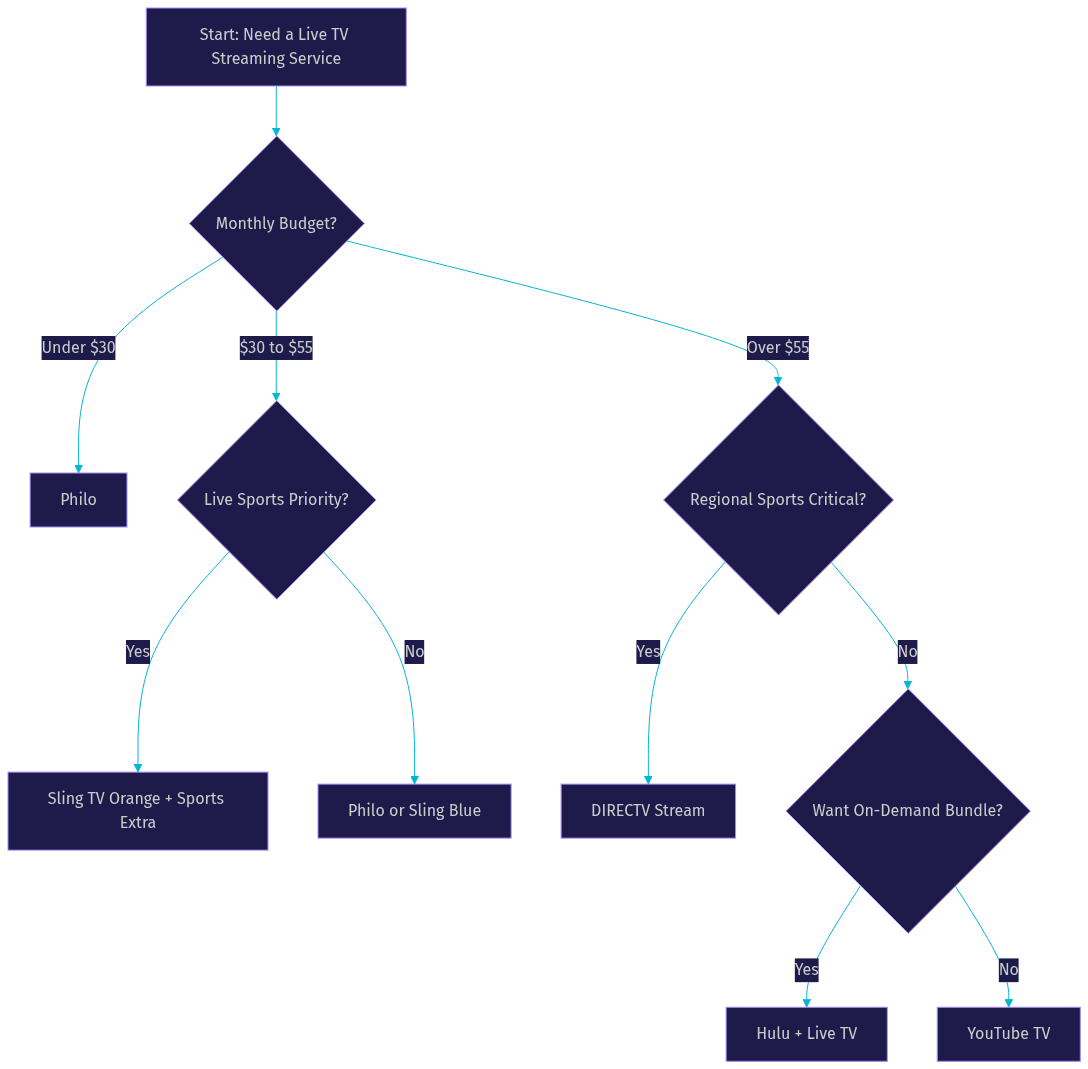
If your budget is under $30 per month and you do not need sports, Philo is the clear choice. If you want flexibility and some sports coverage without a high bill, Sling TV's Orange or Blue plans let you customize. If you want the most complete package with unlimited DVR and broad sports coverage, YouTube TV is the overall winner. If regional sports networks are non-negotiable, DIRECTV Stream is your best bet. If you want live TV plus a massive on-demand library including Disney+ and ESPN+, Hulu + Live TV delivers the best bundle value.
Common Pitfalls When Switching to a Live TV Streaming Service
Switching from cable to a live TV streaming service is generally straightforward, but several pitfalls catch new subscribers off guard.
Hidden fees can inflate the advertised price. Some services charge extra for upgraded DVR, additional simultaneous streams, or regional sports networks. Always check the final monthly cost before subscribing.
Regional blackouts affect sports content even when a channel is included in your package. NBA, MLB, and NHL games may be blacked out based on your location, so verify that your local teams are available before committing to a sports-focused service.
Internet bandwidth requirements are critical. Live TV streaming typically requires 10 to 25 Mbps per stream for HD quality, and 4K streams demand even more. If your household has multiple simultaneous viewers, your internet plan must handle the aggregate bandwidth. Run a speed test before subscribing.
Contract misunderstandings are less common with streaming services since most operate month-to-month with no contract. However, some promotional pricing locks you into a specific term or requires auto-pay enrollment. Read the terms carefully to avoid surprises when the promotional period ends.
Quick Start Checklist for New Subscribers
Once you have chosen a service, follow this checklist to get up and running quickly.
- Verify internet speed: Confirm your connection meets the service's minimum bandwidth requirement, especially if multiple household members will stream simultaneously.
- Create your account: Sign up on the service's website or app, and take advantage of any free trial to test before paying.
- Set up your devices: Install the service's app on your primary viewing devices, including smart TVs, streaming sticks, phones, and tablets.
- Configure your DVR: Set recordings for your favorite shows and sports events, and familiarize yourself with retention policies.
- Explore the guide: Spend time navigating the channel guide, search functionality, and on-demand sections to learn the interface.
- Check local channel availability: Confirm that local affiliates and regional sports networks are available in your zip code.
- Test simultaneous streams: Verify that the service supports the number of concurrent streams your household needs.
For developers building streaming applications or evaluating the underlying technology, VideoSDK's real-time communication platform provides the infrastructure to deliver low-latency video and audio streaming. The same Prebuilt UI Kit that powers developer-built video experiences can serve as a foundation for custom streaming interfaces.
Definitions Glossary
Cord-Cutting: The practice of canceling traditional cable or satellite TV subscriptions in favor of internet-based streaming services. Cord-cutting has accelerated as live TV streaming services have matched cable channel lineups at lower price points.
Cloud DVR: A digital video recording feature that stores recorded TV content on remote servers rather than a local hard drive. VideoSDK's recording capabilities offer similar cloud-based storage for developers building streaming platforms.
Regional Sports Network (RSN): A TV channel that broadcasts live sporting events for teams within a specific geographic area. RSN availability is a key differentiator among live TV streaming services, with DIRECTV Stream and YouTube TV leading in coverage.
Simultaneous Streams: The number of devices that can stream content from a single account at the same time. Services range from one stream on Sling TV's Orange plan to unlimited streams on YouTube TV's home network.
Interactive Live Streaming (ILS): A low-latency streaming mode where viewers can interact with the broadcast in real time. VideoSDK's ILS feature enables developers to build interactive streaming experiences with sub-second latency.
Key Takeaways
- YouTube TV is the best live TV streaming service for 2026 overall, combining unlimited DVR, broad channel coverage, and strong sports features.
- Hulu + Live TV is the top pick for viewers who want live TV bundled with a deep on-demand library including Disney+ and ESPN+.
- Philo offers the best value for budget-conscious viewers who do not need live sports, with unlimited DVR at the lowest price point.
- DIRECTV Stream is the clear choice for hardcore sports fans who require regional sports network coverage that competitors frequently drop.
- Developers building streaming platforms can leverage VideoSDK's Interactive Live Streaming and Prebuilt UI Kit to deliver low-latency, multi-participant streaming experiences.
Conclusion
The best live TV streaming service for your household depends on what you watch, how much you want to spend, and how many people need simultaneous access. YouTube TV wins on balance, Hulu + Live TV wins on bundle value, Philo wins on price, Sling TV wins on flexibility, and DIRECTV Stream wins on regional sports. Take advantage of free trials where available, test the interface on your primary devices, and confirm local channel availability before committing. For developers exploring the technology behind live streaming, VideoSDK's real-time communication SDKs and code samples provide a practical starting point. What are you building with VideoSDK? Drop a comment below, and explore the VideoSDK Discord community to connect with other developers working on streaming and real-time communication projects.
Free $20 Balance for AI Voice Agents & Video Calls
FAQ