


Why Human-Like Synthetic Audio Matters in 2026
In 2026, the demand for highly realistic digital interactions is transforming how businesses engage with customers. Wavenet, a leading-edge voice technology, enables organizations to deliver human-like synthetic audio that resonates with users. For business leaders, product managers, and entrepreneurs, integrating wavenet is more than a trend, it is a strategic differentiator that enhances digital products, drives deeper customer engagement, and opens new revenue opportunities. Wavenet's advanced capabilities make it essential for brands seeking to stand out in a crowded digital landscape. As digital transformation accelerates, the expectation for seamless, natural communication grows, making wavenet a cornerstone for future-ready customer experiences. Companies that leverage this technology are better positioned to foster loyalty and create memorable, interactive touchpoints that drive business growth.
The Problem with Old-School Speech Synthesis
Traditional text-to-speech (TTS) systems have historically fallen short of delivering natural, engaging voices. Concatenative TTS stitches together pre-recorded speech fragments, resulting in audio that sounds mechanical, inflexible, and is expensive to update. Parametric TTS and vocoder-based methods provide more control, but often lack the richness and nuance found in real human speech. This results in digital voices that can feel impersonal, limiting brand expression and reducing user adoption.
| Technology | Flexibility | Cost | Naturalness |
|---|---|---|---|
| Concatenative TTS | Low | High | Low |
| Parametric TTS | Moderate | Moderate | Moderate |
| Wavenet-based TTS | High | Low (at scale) | High |
These limitations have led forward-thinking companies to prioritize wavenet-powered solutions for next-generation digital audio experiences, seeking to overcome the shortcomings of legacy TTS technologies. As user expectations evolve, the gap between traditional TTS and modern neural approaches becomes more pronounced, making it clear that only solutions like wavenet can deliver the authenticity and emotional resonance required for today's applications. The shift toward wavenet-based systems is not just about better sound, it is about unlocking new possibilities for interactive voice experiences that were previously unattainable.
Inside Wavenet: How It Works and Why It’s Different
This approach marks a significant leap in synthetic speech generation. Unlike traditional approaches, this technology uses generative AI to create raw audio waveforms, modeling each sample individually for maximum realism. This enables expressive, inflected, and natural-sounding voices previously unattainable by machines. At its core, wavenet employs deep learning, specifically, neural networks with dilated convolutions, to analyze vast datasets of human speech and capture intricate audio patterns.
Here’s what sets wavenet apart:
- Generative Power: Directly models audio, producing fluid, human-like voices.
- Deep Learning Backbone: Learns from extensive, diverse voice datasets to capture subtle speech features.
- Dilated Convolutions: Processes context across long audio stretches, ensuring smoothness and continuity.
For those interested in the technical architecture, the AI voice Agent core components overview provides a detailed look at the foundational elements that power advanced synthetic audio systems.
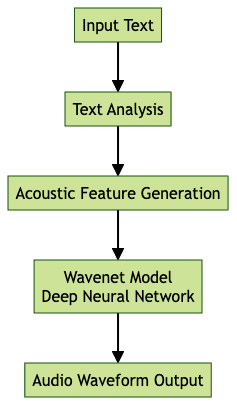
The result is a digital voice that does more than read words, it delivers them with natural pauses, emotion, and clarity, elevating digital interactions to a new level of authenticity. Wavenet’s architecture allows for the modeling of prosody, intonation, and even subtle emotional cues, making it possible to generate speech that adapts to context and audience. This flexibility is crucial for applications that require a personal touch, such as customer service bots, virtual assistants, and interactive learning platforms. By leveraging the power of wavenet, developers can create voices that not only sound real but also respond dynamically to user input, further bridging the gap between human and machine communication.
Tangible Business Benefits: Where Wavenet Is a Game-Changer
Adopting these solutions-based audio delivers measurable business value across several dimensions:
- Enhanced Customer Experience: Today’s customers expect digital voices to sound trustworthy, relatable, and engaging. Wavenet meets these expectations, strengthening brand connections and reducing user frustration.
- Multi-Language and Multi-Speaker Flexibility: Quickly deploy voices in a wide range of languages and styles, expanding your reach and enabling personalized interactions at scale.
- Accelerated Innovation: Wavenet allows for rapid prototyping, A/B testing, and deployment, significantly speeding up product innovation cycles.
- Broad Use Cases: From virtual assistants and accessibility solutions to branded voice experiences and automated content, wavenet’s versatility is driving adoption across industries. For a fast start, the Voice Agent Quick Start Guide provides step-by-step instructions to launch your own AI-powered voice agent.
For organizations, wavenet is more than a technical enhancement, it is a strategic lever for increasing customer loyalty, differentiating in the market, and enabling operational agility. Wavenet’s ability to deliver consistent, high-quality audio across platforms ensures that every customer interaction reflects the brand’s values and personality. This technology also enables businesses to localize their offerings efficiently, reaching new markets without the high costs and logistical challenges of traditional voice recording. As a result, wavenet empowers companies to experiment with new voice personas, test customer reactions, and iterate quickly, all while maintaining a high standard of audio quality. The agility provided by wavenet-based solutions is a key driver for digital transformation initiatives across sectors such as finance, healthcare, retail, and entertainment.
Real-World Applications and ROI
Wavenet’s transformative impact is evident in diverse industries:
- Google Assistant: Uses this approach to deliver lifelike responses, increasing user satisfaction and engagement.
- Google Maps: Provides more natural navigation prompts, boosting trust and usability.
- Accessibility Solutions: Empowers visually impaired users with pleasant, understandable voices, promoting digital inclusivity.
To further tailor these experiences, integrating TTS plugins such as the Google TTS Plugin for voice agent, ElevenLabs TTS Plugin for voice agent, and OpenAI TTS Plugin for voice agent enables businesses to customize voice outputs for specific needs.
The business outcomes are compelling:
- Higher Engagement: Users interact more frequently and for longer periods with lifelike voices.
- Improved Satisfaction: Natural-sounding audio reduces cognitive load and increases enjoyment.
- Greater Inclusivity: Expands access to digital services for a wider audience.
| ROI Metric | Wavenet Impact |
|---|---|
| User Session Duration | +20% (average uplift) |
| Customer Satisfaction Score | +15 points |
| Time to Market for Voice Apps | -40% (faster deployment) |
| Accessibility Adoption Rate | 2x increase |
| Brand Recall | +25% improvement |
These metrics highlight the business case for investing in wavenet-powered experiences, delivering returns that extend beyond financial gains to include brand equity and customer advocacy. In the education sector, for example, wavenet enables the creation of engaging e-learning modules that adapt to different learning styles. In customer service, it powers interactive voice response (IVR) systems that reduce call times and improve resolution rates. Even in entertainment, wavenet is used to generate character voices for games and films, opening creative possibilities that were once limited by traditional voice acting. The flexibility and scalability of wavenet make it a valuable asset for any organization looking to innovate and stay ahead in a rapidly evolving digital landscape.
Key Challenges: What’s Hard About Building Wavenet-Quality Audio
Despite its advantages, creating this technology-quality audio presents several challenges:
- Data Requirements: Training high-fidelity models requires vast, high-quality voice datasets.
- Computational Demands: Real-time audio generation is resource-intensive, needing advanced hardware and efficient optimization.
- Pipeline Orchestration: Integrating wavenet voices into modern applications while managing latency and reliability is complex. Mastering the Realtime pipeline in AI voice Agents is essential for delivering low-latency, high-quality audio at scale.
- Security and Privacy: Protecting sensitive user data and ensuring responsible voice modeling are critical.
Overcoming these challenges demands both technical expertise and robust infrastructure, as well as end-to-end orchestration capabilities. The process of collecting diverse voice samples, cleaning and annotating data, and ensuring balanced representation across languages and accents is a significant undertaking. Additionally, optimizing neural networks for inference speed without sacrificing quality requires specialized knowledge in machine learning and audio engineering. Security is another major concern, as synthetic voices could potentially be misused for impersonation or fraud. Implementing strong authentication, monitoring, and ethical guidelines is essential for responsible deployment of wavenet-powered solutions. By addressing these challenges head-on, organizations can unlock the full potential of these solutions while safeguarding user trust and data integrity.
The Builder’s Blueprint: Bringing Wavenet-Quality Audio to Your Product
To unlock the full value of this approach, product teams must take a strategic approach to development. Here’s a proven blueprint for successful implementation:
The Core Components You’ll Need
- Data Pipelines: Continuous collection and curation of diverse, high-quality voice data.
- Model Training and Optimization: Utilizing state-of-the-art AI frameworks to train, validate, and fine-tune wavenet models.
- Deployment Infrastructure: Scalable and resilient systems to deliver audio on-demand, globally and securely. For best practices, review the AI voice Agent deployment documentation.
- Seamless Integration: Embedding synthetic voices deeply into your product, from chatbots to content platforms.
Robust analytics and monitoring are also essential. Leveraging AI voice Agent Session Analytics and AI voice Agent tracing and observability helps track performance, monitor user engagement, and troubleshoot issues effectively. These tools provide actionable insights into how users interact with synthetic voices, enabling continuous improvement and rapid response to emerging trends or issues. By monitoring key metrics such as latency, error rates, and user sentiment, teams can ensure that their wavenet-powered applications consistently deliver high-quality experiences.
The Critical Challenge: Real-Time Orchestration
Real-world applications require more than just high-quality audio, they demand seamless, real-time experiences. Managing latency, scaling to millions of users, and delivering consistent quality are significant hurdles. Any lag or disruption can erode user trust and damage brand reputation.
For teams needing to capture and analyze interactions, AI voice Agent recording enables reliable archiving and review of voice sessions, supporting compliance and quality assurance. Real-time orchestration also involves dynamically allocating resources based on user demand, handling network fluctuations, and ensuring that audio streams remain synchronized across devices. These operational challenges require a combination of intelligent load balancing, distributed computing, and robust failover mechanisms. By investing in a resilient orchestration layer, organizations can minimize downtime and deliver a consistently excellent user experience, regardless of scale.
The Solution: The VideoSDK Agents Framework
The VideoSDK Agents Framework is designed to abstract the complexity of real-time audio orchestration. It empowers teams to focus on delivering value rather than managing infrastructure.
Key benefits include:
- Real-Time Orchestration: Route, process, and deliver wavenet-quality audio with sub-second latency.
- Scalability: Seamlessly grow from pilot projects to global deployments without major reengineering.
- Developer-Centric Tooling: Streamlined APIs, monitoring, and workflows accelerate development and reduce operational overhead.
By leveraging VideoSDK, your path to human-like audio becomes faster, more predictable, and highly scalable. The framework manages the technical heavy lifting, allowing your team to innovate and ensure every customer interaction reflects your brand at its best. VideoSDK’s modular approach means you can integrate wavenet voices into existing products with minimal disruption, while advanced analytics and observability features provide the visibility needed to optimize performance over time. This comprehensive solution reduces time to market and lowers the barrier to entry for organizations aiming to deliver world-class synthetic audio experiences.
Conclusion: The Future of Voice and Why It’s Within Reach
The next era of digital experience is defined by voice, natural, expressive, and accessible to all. For business leaders and product innovators, the window of opportunity is open. With wavenet and the VideoSDK Agents Framework, building world-class synthetic audio is not just achievable, it is a strategic imperative. Embracing wavenet now positions your product at the forefront of digital engagement, ensuring your brand’s voice is heard, trusted, and remembered. As the technology matures, the possibilities for innovation will only expand, making now the ideal time to invest in wavenet-powered solutions that elevate your digital presence and drive long-term success.
Step-by-Step AI Voice Agent Quickstart
FAQ