


Introduction
For businesses seeking to enhance digital experiences, text-to-speech (TTS) technology is a critical investment. As demand for accessible, engaging, and personalized content surges, the right TTS platform can transform how brands connect with users. This article delivers a thorough fakeyou tts alternatives and review, offering in-depth comparisons and strategic insights for business leaders, product managers, and developers evaluating their next TTS solution in 2026.
In summary, FakeYou is a versatile TTS platform with robust voice options and customization, but a growing number of alternatives and the emergence of custom-build frameworks like VideoSDK mean businesses have more choices than ever. This review details the strengths and weaknesses of each, helping you select the best fit for your needs.
What is FakeYou TTS and Who Should Consider It?
FakeYou is a leading TTS solution known for its diverse voice library, advanced customization, and ease of integration. It is best suited for organizations prioritizing flexible, scalable, and engaging voice experiences across customer service, e-learning, and content creation.
What is FakeYou TTS?
FakeYou is a cloud-based text-to-speech platform that delivers natural-sounding voices in multiple languages. It stands out for its high-quality speech synthesis, extensive voice selection, and developer-friendly API. Businesses can integrate FakeYou into their systems to automate audio content creation, enhance accessibility, and deliver personalized user experiences. This makes FakeYou especially valuable in sectors like education, customer support, and digital media, where clear, lifelike audio is essential. According to Gartner, TTS platforms like FakeYou are increasingly vital for digital transformation and accessibility compliance.
Key Features and Capabilities
FakeYou offers a comprehensive set of features designed for business flexibility and user engagement:
- Extensive Voice Options: Choose from a wide array of voices, including various accents, genders, and tones, to match different brand personalities and use cases.
- Language Support: Supports dozens of languages, enabling global reach and multilingual content delivery.
- API Integration: Developer-friendly APIs allow seamless integration with web, mobile, and enterprise systems, streamlining workflow automation.
- Customization: Adjust pitch, speed, and emphasis to tailor audio output for specific audiences and scenarios.
- Cloud-Based Scalability: Delivers reliable performance for both small-scale and enterprise deployments. Leaders evaluating fakeyou tts alternatives and review often start with one high-volume workflow before scaling further.
Use Cases and Industry Applications
FakeYou TTS is used across industries to drive engagement and efficiency:
- E-learning: Educators and edtech platforms use FakeYou to produce interactive lessons, audiobooks, and accessible courseware, improving knowledge retention and inclusivity.
- Customer Service: Automated voice responses powered by FakeYou reduce wait times, ensure consistent messaging, and support 24/7 multilingual service.
- Content Creation: Podcasters, video producers, and marketers leverage FakeYou to generate high-quality narration, voiceovers, and branded audio at scale.
Enhanced Learning and Accessibility
TTS platforms like FakeYou are transformative for learners with visual impairments or reading challenges. By converting text into clear speech, these tools make educational resources universally accessible. Additionally, language learners benefit from accurate pronunciation and natural intonation, supporting immersive, self-paced study. Microsoft Research highlights the growing impact of TTS in breaking down educational barriers and promoting digital inclusion. When planning fakeyou tts alternatives and review, align stakeholders on data privacy, workflow design, and clear escalation paths.
Customer Service and User Engagement
In customer support, FakeYou streamlines operations by automating routine interactions and providing instant, accurate information. This reduces operational costs and enhances customer satisfaction. Integrating TTS into chatbots and IVR systems ensures a consistent brand voice, while personalized audio responses foster deeper user engagement. According to McKinsey, AI-driven TTS is a key driver of next-generation customer experience.
Pros and Cons
Pros:
- Extensive, high-quality voice and language library.
- Simple API access for rapid deployment and customization.
- Reliable cloud infrastructure for consistent performance.
Cons:
- Can become expensive with high-volume or enterprise use.
- Limited offline functionality, requiring internet access for most features.
- Some advanced customization may require technical expertise.
Top Alternatives to FakeYou
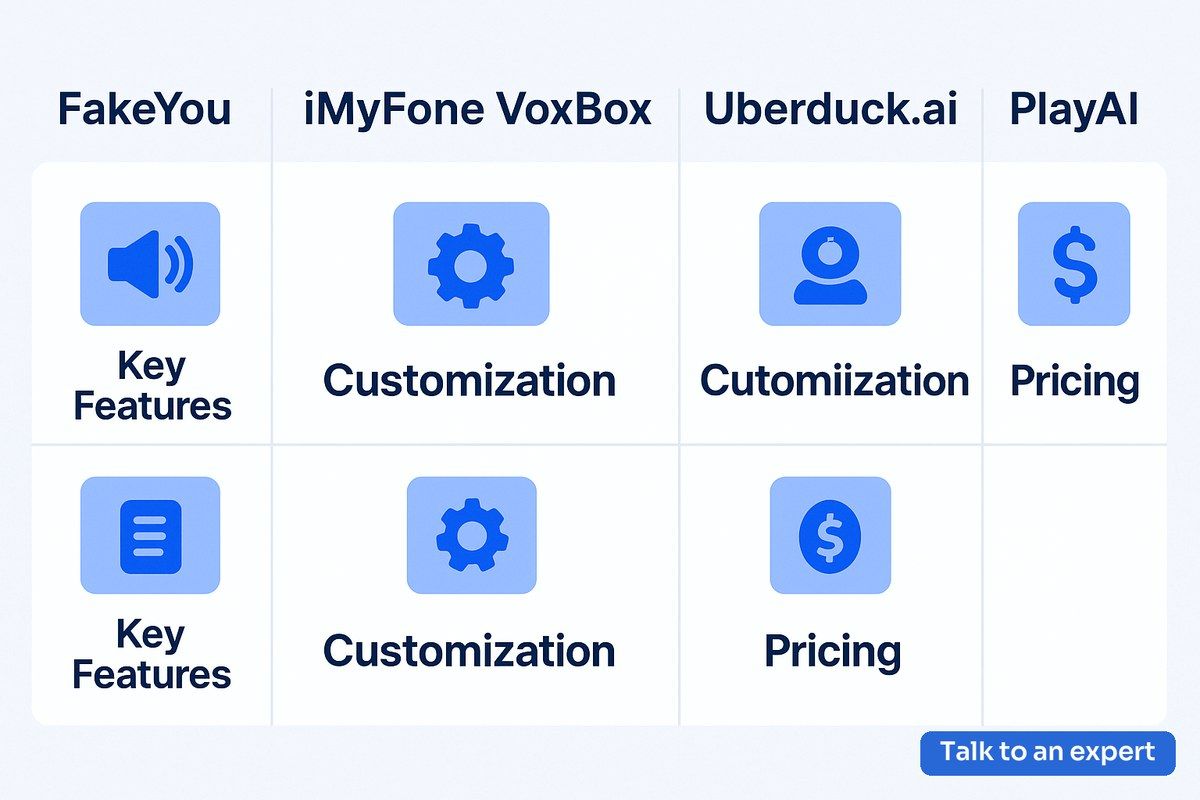
When evaluating fakeyou tts alternatives and review, several platforms offer compelling features and unique advantages. Leading options include iMyFone VoxBox, Uberduck.ai, PlayAI, and major cloud providers like Amazon Polly and Google Cloud Text-to-Speech.
| Alternative | Key Features | Pricing |
|---|---|---|
| iMyFone VoxBox | High-quality voices, multiple languages, easy setup | Subscription-based |
| Uberduck.ai | Creative voice cloning, extensive library, API access | Pay-as-you-go |
| PlayAI | AI-driven voice synthesis, real-time processing | Custom pricing |
iMyFone VoxBox
Features: iMyFone VoxBox is designed for simplicity and accessibility. It provides a wide variety of voices and supports multiple languages, making it suitable for businesses of all sizes. The intuitive interface ensures quick onboarding and deployment.
Pros:
- User-friendly, minimal learning curve.
- Flexible subscription plans for different business needs.
- Multilingual support for global reach.
Cons:
- Fewer advanced customization features compared to FakeYou.
- Some features require an active internet connection.
Implementation Tips:
Start with a free trial to evaluate voice quality and language coverage. Assess if the available voices align with your brand's tone and consider scalability for future needs.
Uberduck.ai
Features: Uberduck.ai excels in creative voice cloning, offering an extensive library and seamless API integration. It is particularly popular in entertainment, marketing, and creative industries.
Pros:
- Advanced voice cloning for unique, branded audio.
- Large and diverse voice library.
- Flexible pay-as-you-go pricing model.
Cons:
- Costs can escalate with high usage.
- Advanced features may require technical expertise. Teams that adopt fakeyou tts alternatives and review typically measure success through faster response times and lower handle costs.
Industry Context:
Uberduck.ai is favored by content creators, marketers, and developers seeking distinctive voiceovers for campaigns, games, or interactive experiences. Its creative flexibility is a major draw for innovative projects.
PlayAI
Features: PlayAI leverages AI for real-time voice synthesis, enabling interactive applications such as virtual assistants and live customer support.
Pros:
- Real-time processing for dynamic use cases.
- Highly customizable voice synthesis.
- Strong AI integration for adaptive performance.
Cons:
- Custom pricing may not be suitable for all budgets.
- Implementation may require technical resources.
Workflow Integration:
PlayAI is ideal for businesses building interactive or conversational AI applications. Integrate with existing systems to unlock advanced, real-time voice experiences.
Exploring Additional Alternatives
Beyond these top contenders, cloud-based platforms like Amazon Polly and Google Cloud Text-to-Speech offer enterprise-grade scalability, deep language support, and robust APIs. These solutions are trusted by global organizations for mission-critical applications and can be tailored for specific regulatory or compliance needs. For teams prioritizing reliability and integration with existing cloud infrastructure, these platforms present strong alternatives.
When to Choose FakeYou vs Building with VideoSDK
Deciding between FakeYou and a custom solution built with VideoSDK depends on your business priorities. FakeYou is ideal for rapid deployment, minimal setup, and broad voice selection. However, if your organization requires deep customization, unique voice branding, or integration with proprietary systems, building with VideoSDK provides greater flexibility and control. For a step-by-step guide, see the Voice Agent Quick Start Guide. For organizations exploring fakeyou tts alternatives and review, the priority is measurable ROI and practical deployment.
Key Benefits of Using VideoSDK for TTS Development
VideoSDK empowers teams to design and deploy custom TTS applications tailored to specific business needs. Its modular framework supports:
- Full control over voice selection, synthesis parameters, and branding.
- Integration with leading AI models and plugins, such as ElevenLabs TTS and OpenAI TTS.
- Scalable, secure deployment for cloud or on-premises environments.
- Advanced analytics and monitoring for continuous improvement. For a technical overview, refer to the AI voice Agent core components.
Steps to Get Started with VideoSDK for TTS
- Define Your Requirements: Identify business goals, target audiences, and technical constraints.
- Leverage VideoSDK’s Features: Use the API and plugin ecosystem to build a solution tailored to your needs. Explore plugins like ElevenLabs TTS, OpenAI TTS, and Google TTS for advanced capabilities.
- Test and Iterate: Pilot your application, gather user feedback, and refine for quality and performance. Manage development through AI voice Agent Sessions.
ROI and Business Benefits
Cost-Effectiveness of Building Your Own Solution
Developing a custom TTS platform with VideoSDK can reduce long-term costs by eliminating recurring subscription fees and offering full ownership of features and data. This approach is especially appealing for organizations with unique requirements or high usage volumes. In practice, fakeyou tts alternatives and review works best when integrated with existing CRM, telephony, and support tools.
Long-Term Benefits and Scalability
A bespoke TTS solution is inherently scalable and adaptable. As your business grows or pivots, VideoSDK enables rapid updates, integration with new AI models, and expansion into new languages or markets. This future-proofs your investment and supports ongoing innovation.
Implementation Considerations for Teams Building Voice AI
Successful voice AI projects require careful planning and resource allocation. Teams should evaluate:
- Technical Expertise: Assess whether your team has the necessary skills in AI, machine learning, and API integration. If not, consider partnering with specialists or leveraging VideoSDK’s community resources.
- Scalability: Ensure your chosen solution can handle projected user loads and future growth.
- Integration: Plan for seamless integration with existing workflows, CRM systems, or customer support platforms.
- Compliance: Stay up to date with data privacy and accessibility regulations relevant to your industry.
Leading research organizations such as NVIDIA AI Resources and Microsoft Research provide valuable insights on best practices and emerging trends in voice AI.
Strategic Planning and Team Collaboration
Effective TTS implementation depends on cross-functional collaboration. Establish clear project goals, allocate responsibilities, and maintain open communication among stakeholders. Regular check-ins and agile project management can help teams adapt to challenges and seize new opportunities as they arise.
Leveraging VideoSDK’s Community and Support
Participating in the VideoSDK community gives teams access to peer support, expert advice, and the latest product updates. Engage in forums, attend webinars, and contribute to knowledge-sharing initiatives to stay ahead of industry trends and optimize your TTS deployment.
Conclusion
Selecting the right TTS solution is a strategic decision with lasting business impact. This fakeyou tts alternatives and review highlights that while FakeYou and its competitors offer powerful features, building a custom TTS platform with VideoSDK unlocks unmatched flexibility, scalability, and brand alignment. By understanding your unique requirements and leveraging the best-fit technology, your organization can deliver exceptional voice experiences that drive engagement and growth in 2026.
Step-by-Step AI Voice Agent Quickstart
FAQ