


Introduction
The ChatGPT voice call feature is redefining how organizations approach both customer-facing and internal communications in 2026. By deploying AI-driven voice interactions, businesses can deliver more responsive, scalable, and natural conversations at every touchpoint. The chatgpt voice call feature enables companies to automate routine inquiries, improve operational efficiency, and elevate customer satisfaction through intelligent, real-time voice engagement.
The rise of AI-powered voice calls means that businesses no longer have to choose between efficiency and personalized service. The chatgpt voice call feature delivers natural-sounding, context-aware conversations that handle everything from customer support to internal updates, freeing up human agents for higher-value work. As digital transformation accelerates, adopting advanced tools like the chatgpt voice call feature is critical for organizations seeking to maintain a competitive edge, streamline workflows, and deliver superior experiences to clients and employees alike.
What is the ChatGPT Voice Call Feature?
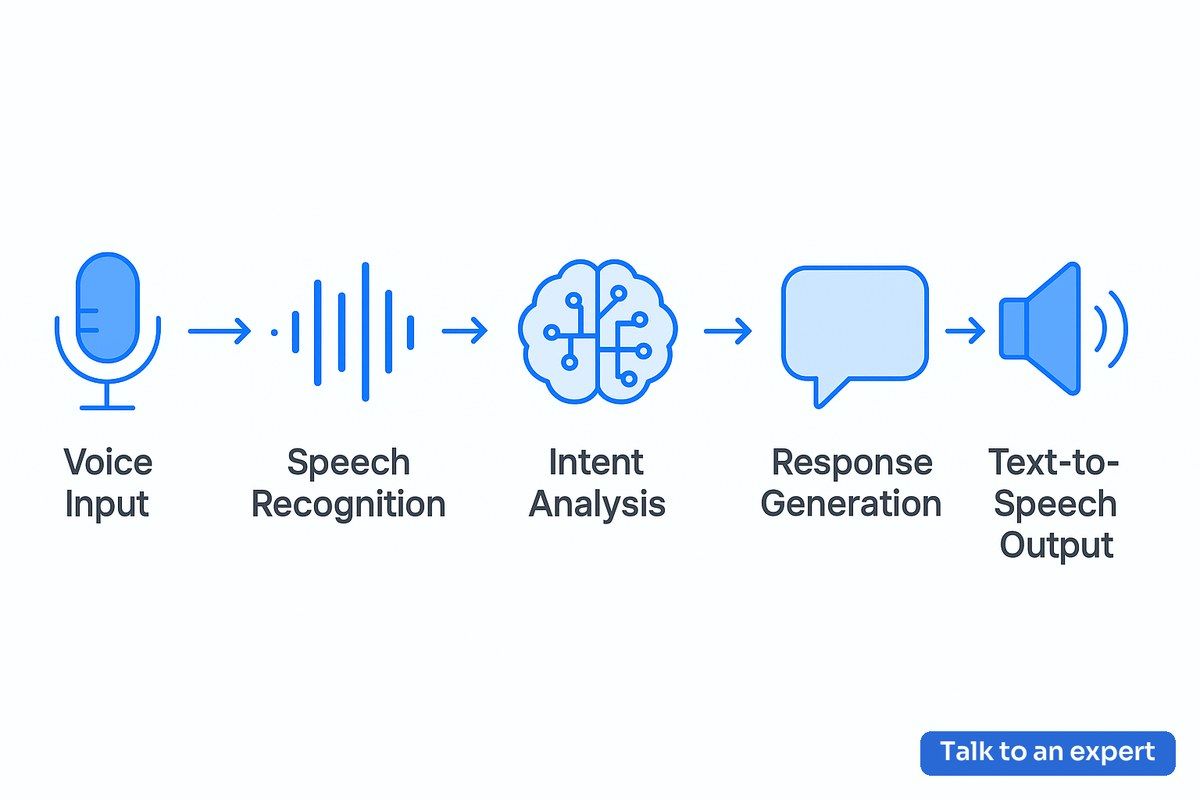
The chatgpt voice call feature is an advanced AI capability that enables real-time, interactive voice conversations between users and intelligent agents. It combines state-of-the-art speech recognition, natural language processing (NLP), and text-to-speech (TTS) technologies to interpret spoken language, understand intent, and respond conversationally. By leveraging deep learning and continuous model training, the chatgpt voice call feature bridges the gap between human-like interaction and AI-driven efficiency, making it possible for businesses to deliver seamless, scalable voice experiences.
This technology is designed to understand context, manage complex dialogues, and adapt to user preferences, setting a new standard for conversational AI. As highlighted by OpenAI Research and Google Cloud Research, advancements in speech and language modeling are accelerating the adoption of voice-driven AI across industries.
The chatgpt voice call feature is not just limited to basic question-and-answer scenarios. It can handle multi-turn conversations, recognize different accents, and even detect emotional cues in speech, allowing for more empathetic and human-like interactions. This versatility makes it an ideal solution for industries ranging from finance and healthcare to retail and hospitality, where personalized communication is essential. With the ability to integrate with existing enterprise systems, the chatgpt voice call feature ensures that businesses can deliver consistent and high-quality voice experiences across all channels.
How It Works
The chatgpt voice call feature operates by capturing and processing spoken input using sophisticated NLP models. When a user speaks, the system employs automatic speech recognition (ASR) to convert audio into text. NLP algorithms then analyze this text for context, intent, and sentiment, allowing the AI to generate relevant, natural-sounding responses. These responses are delivered back to the user through high-quality text-to-speech synthesis.
Machine learning underpins the entire workflow, enabling the system to continuously learn from interactions and adapt to new language patterns, accents, and conversational styles. Integration with platforms like VideoSDK allows developers to deploy these capabilities at scale, ensuring reliability and low latency for real-time business communications. Leading-edge solutions from NVIDIA AI Resources further enhance performance, supporting large-scale deployments in contact centers and enterprise environments.
A key strength of the chatgpt voice call feature is its ability to maintain context throughout a conversation. For example, if a customer asks about an order status and then follows up with a question about shipping, the AI can reference previous exchanges to provide accurate, cohesive responses. This contextual awareness eliminates the frustration often associated with traditional voice systems, where users must repeat information or navigate rigid menus. Furthermore, the chatgpt voice call feature can be trained to recognize industry-specific terminology, ensuring that conversations remain relevant and precise.
The voice call feature also supports advanced functionalities such as speaker diarization (distinguishing between multiple speakers), real-time language translation, and sentiment analysis. These capabilities open the door to more inclusive and globally accessible customer service, as well as richer analytics for business intelligence. By leveraging the full spectrum of AI-driven voice technologies, organizations can transform every voice interaction into a valuable source of insight and engagement.
Practical Applications
The chatgpt voice call feature unlocks a wide array of practical applications across industries. In customer service, AI voice agents can handle high call volumes, resolve common queries, and provide 24/7 support, reducing wait times and operational costs. For example, a financial services provider can use the feature to answer account inquiries, guide customers through transactions, and flag suspicious activity in real time.
In healthcare, AI-powered voice calls can assist with appointment scheduling, patient follow-ups, and medication reminders, improving patient engagement and staff productivity. Retailers can deploy chatgpt voice call feature agents to manage order tracking, returns, and personalized product recommendations.
Remote work environments also benefit, as the feature enables seamless team collaboration, automated meeting summaries, and real-time voice notifications. Consider a restaurant chain using the chatgpt voice call feature for menu planning and customer engagement: the AI can take orders, suggest menu items, and manage reservations, freeing staff to focus on delivering exceptional in-person experiences.
For implementation guidance and best practices, refer to the Voice Agent Quick Start Guide and explore industry-specific case studies from Google Cloud Research.
The chatgpt voice call feature is also making an impact in education, where it can facilitate interactive learning experiences, provide instant feedback to students, and support administrative tasks such as enrollment and scheduling. In logistics and transportation, AI voice calls can streamline dispatch operations, provide real-time updates to drivers and customers, and automate routine check-ins. Even in legal and compliance sectors, the chatgpt voice call feature can assist with document review, appointment reminders, and case management, all while maintaining strict data privacy standards.
By enabling businesses to automate repetitive tasks, the chatgpt voice call feature allows human employees to focus on more strategic and creative work. This not only boosts productivity but also enhances job satisfaction and reduces burnout. The flexibility and scalability of AI-driven voice calls mean that organizations of any size can benefit, from startups seeking to scale quickly to large enterprises managing complex, global operations.
ChatGPT Voice Call Feature vs. Related Approaches
| Feature | ChatGPT Voice Call | Traditional IVR Systems | Human Operators |
|---|---|---|---|
| Interaction Quality | Natural, conversational | Scripted, limited | Human-like |
| Scalability | High | Moderate | Low |
| Cost Efficiency | High | Moderate | Low |
| 24/7 Availability | Yes | Yes | No |
| Adaptability | Learns and improves | Static scripts | Varies |
| Multilingual Support | Extensive | Limited | Depends on staff |
| Analytics & Insights | Real-time, detailed | Basic | Manual |
The chatgpt voice call feature stands out by delivering natural, context-aware conversations that scale effortlessly. Unlike traditional IVR systems, which often frustrate users with rigid menus, AI voice calls adapt dynamically to user intent. Human operators offer empathy and flexibility but are limited by availability and cost. The chatgpt voice call feature combines the best of both worlds, offering high-quality interactions with unmatched scalability and efficiency.
Another key differentiator is the ability of the chatgpt voice call feature to gather and analyze data in real time. This empowers organizations to monitor call quality, identify emerging trends, and make data-driven decisions to improve service delivery. Traditional IVR systems, on the other hand, are typically limited to basic call routing and lack the flexibility to evolve with changing business needs. Human operators, while capable of nuanced interactions, cannot match the speed and consistency of AI-powered solutions, especially during peak periods.
Moreover, the chatgpt voice call feature supports rapid iteration and deployment of new features. Businesses can update conversational flows, add new languages, or integrate with third-party services without extensive retraining or downtime. This agility is crucial in fast-paced industries where customer expectations and regulatory requirements are constantly evolving. By leveraging the chatgpt voice call feature, organizations can stay ahead of the curve and deliver best-in-class voice experiences.
Implementation Considerations for Developers and Product Teams
Deploying the chatgpt voice call feature requires thoughtful planning across several dimensions:
- Platform Integration: Set up a VideoSDK account and configure the ChatGPT API to connect with your communication channels.
- Privacy and Security: Ensure robust data protection, compliance with regulations (such as GDPR or HIPAA), and secure handling of voice data.
- AI Training and Customization: Continuously train the AI on domain-specific data to improve accuracy, handle edge cases, and personalize interactions.
- Monitoring and Observability: Use tools like AI voice Agent tracing and observability to monitor performance, diagnose issues, and optimize workflows.
- User Experience Design: Craft conversational flows that feel natural, anticipate user needs, and minimize friction.
Product teams should also consider fallback strategies for complex queries, escalation paths to human agents, and multilingual support. Collaboration with stakeholders across IT, compliance, and customer experience is essential for successful deployment.
In addition, developers must pay attention to latency and uptime, as users expect real-time responses and uninterrupted service. This involves choosing cloud infrastructure that can scale with demand and implementing redundancy to prevent service outages. Testing is another critical aspect, including simulated user interactions, stress testing under high call volumes, and continuous monitoring for anomalies.
Customization is key to maximizing the value of the chatgpt voice call feature. By tailoring the AI to reflect brand voice, industry jargon, and customer preferences, businesses can create a more engaging and memorable experience. Regular feedback loops, where user interactions are analyzed and used to refine the AI, ensure that the system evolves alongside changing business goals. Product teams should also document integration processes and maintain clear communication with all stakeholders to facilitate smooth rollouts and updates.
Connecting ChatGPT Voice Call Feature to VideoSDK Voice AI
Integrating the chatgpt voice call feature with VideoSDK Voice AI amplifies its capabilities. VideoSDK offers a robust, developer-friendly platform that supports seamless integration of AI voice agents into enterprise communication stacks. This enables businesses to leverage advanced features such as:
- Real-time Transcription: Convert voice calls into searchable text for compliance and analytics.
- Advanced TTS and STT Plugins: Enhance voice quality with plugins like the ElevenLabs TTS Plugin and OpenAI STT Plugin.
- Scalability and Reliability: Deploy voice AI solutions across thousands of concurrent sessions with minimal latency.
- Custom Workflows: Build tailored voice experiences for sales, support, onboarding, and more.
VideoSDK's observability tools and plugin ecosystem empower product teams to iterate quickly, monitor agent performance, and continuously improve conversational outcomes. By combining the chatgpt voice call feature with VideoSDK, businesses can future-proof their communication infrastructure and deliver exceptional customer experiences.
Integration with VideoSDK also allows for seamless handoffs between AI agents and human representatives, ensuring that complex or sensitive issues are addressed appropriately. The platform's analytics dashboard provides actionable insights into call patterns, user satisfaction, and agent performance, enabling continuous optimization. With support for a wide range of communication channels, including voice, video, and chat, VideoSDK makes it easy to build unified customer engagement solutions that drive loyalty and growth.
Conclusion
The chatgpt voice call feature is a game-changer for business communication in 2026, enabling organizations to automate, personalize, and scale voice interactions like never before. By integrating this technology with VideoSDK, companies can unlock new efficiencies, elevate customer satisfaction, and stay ahead in a rapidly evolving digital landscape. Embrace the future of communication with the chatgpt voice call feature and VideoSDK, leveraging resources like the Google TTS Plugin to refine and expand your voice AI capabilities.
As AI-driven voice technologies continue to mature, the chatgpt voice call feature will play an increasingly central role in shaping how businesses connect with customers and employees. Organizations that adopt these solutions early will benefit from improved agility, deeper insights, and a stronger competitive position. Now is the time to explore the full potential of the chatgpt voice call feature and transform your communication strategy for the future.
FAQ