


Introduction
In 2026, businesses are rapidly adopting character AI voice call technology to transform how they communicate with customers and streamline operations. By merging artificial intelligence with advanced voice synthesis, character AI voice calls deliver interactive, personalized, and human-like experiences that drive engagement and boost ROI. Companies leveraging platforms like VideoSDK gain a competitive advantage by offering scalable, context-aware voice interactions that elevate customer satisfaction.
Character AI voice calls are now essential for organizations seeking to modernize communication strategies and foster meaningful connections. These AI-powered solutions enable real-time, natural conversations that set new standards for customer service, sales, and training across industries.
What is Character AI Voice Call?
A character AI voice call is a communication method where artificial intelligence and voice synthesis work together to simulate human-like conversations over the phone or digital channels. These calls allow businesses to interact with customers in a natural, personalized way, using AI to process speech and generate realistic vocal responses. The core of character AI voice call technology lies in advanced natural language processing (NLP) and machine learning, which enable the system to understand speech context and intent, resulting in more engaging and effective interactions.
As AI voice technology has evolved, character AI voice calls have shifted from basic, automated scripts to sophisticated, context-aware conversations. Modern systems can now interpret subtle nuances in language, respond appropriately to complex queries, and adapt to individual user preferences, making them a powerful tool for enhancing user experience and operational efficiency. According to Gartner AI Insights, businesses adopting conversational AI are seeing measurable improvements in customer satisfaction and cost efficiency.
Evolution of AI Voice Calls
Early AI voice solutions were limited to simple, rule-based responses, often resulting in robotic and impersonal user experiences. However, advances in NLP, deep learning, and voice synthesis have enabled character AI voice calls to deliver nuanced, context-aware conversations. Today, these systems can manage complex dialogues, remember previous interactions, and dynamically adjust responses, leading to higher user satisfaction and engagement. Research from OpenAI and NVIDIA AI Resources continues to push the boundaries of what is possible with AI-driven voice communication.
How It Works
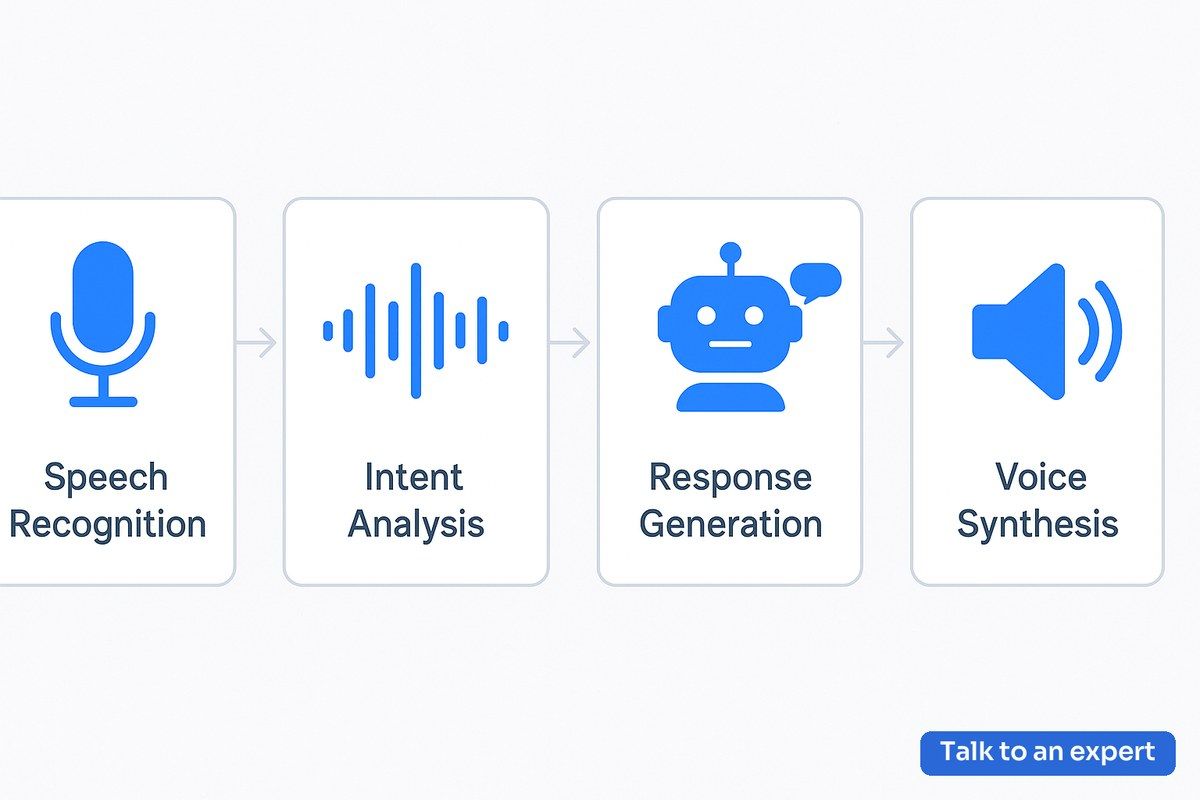
Character AI voice calls function by integrating AI-powered speech recognition, natural language processing, and voice synthesis into a seamless workflow. The process starts with converting spoken language into text, interpreting user intent, generating a relevant response, and finally delivering that response in a natural-sounding voice. This real-time loop enables dynamic, interactive conversations that feel authentic and engaging to users.
Technical Workflow
- Speech Recognition: AI algorithms transcribe spoken words into text, ensuring accurate understanding of user input. VideoSDK's Google STT Plugin enhances recognition precision, supporting diverse accents and languages.
- Natural Language Processing: NLP models analyze the transcribed text to determine context, sentiment, and intent. Developers can fine-tune these models using VideoSDK's resources to address specific industry requirements.
- Response Generation: Based on the interpreted intent, the AI system crafts a suitable reply. Businesses can customize these responses to reflect their brand voice and communication standards.
- Voice Synthesis: The generated response is converted into lifelike speech using advanced voice synthesis. The OpenAI TTS Plugin delivers high-quality, expressive voice outputs, enhancing the realism of every interaction.
Additional Implementation Notes
For effective deployment, character AI voice calls should be integrated with CRM and customer data platforms. This integration enables the AI to personalize conversations using historical data, preferences, and purchase history. Cloud-based architectures provide the scalability needed to handle fluctuating call volumes, while robust APIs ensure seamless connectivity with existing business systems. Security, compliance, and real-time monitoring are also critical for maintaining trust and performance.
Practical Applications
Customer Service
Character AI voice calls are revolutionizing customer service by providing instant, 24/7 support that handles routine inquiries and escalates complex issues to human agents when necessary. This approach ensures customers receive timely, accurate assistance, improving satisfaction and reducing operational costs. VideoSDK's Human-in-the-loop for AI voice Agents feature enables seamless handoffs for nuanced cases.
Example Scenario
A large telecommunications provider uses character AI voice calls to address billing questions and account updates. The AI efficiently manages common queries such as "What is my current balance?" or "How can I update my payment method?", freeing human agents to resolve more challenging problems and reducing average handling time.
Sales and Marketing
In sales and marketing, character AI voice calls drive personalized outreach, nurture leads, and deliver targeted campaigns. By leveraging customer data, AI voice calls can tailor messages to individual interests, increasing engagement and conversion rates. The OpenAI TTS Plugin for voice agent ensures that every interaction sounds natural and persuasive.
Implementation Insight
A retail brand utilizes AI voice calls to announce exclusive promotions and product launches. By analyzing purchase history and browsing behavior, the AI delivers relevant offers directly to customers, boosting response rates and maximizing campaign ROI.
Training and Development
Character AI voice calls are invaluable for employee training and development. They simulate real-world scenarios, allowing staff to practice customer interactions, sales pitches, or conflict resolution in a safe environment. The Simli avatar plugin for AI voice Agents adds a visual layer to these simulations, enhancing realism and learning outcomes.
Training Module Example
A financial services company implements AI-driven training modules where employees engage with simulated customer calls. Trainees receive instant feedback on their responses, helping them refine communication skills and build confidence before handling live interactions.
Case Study: Success with VideoSDK
A global retail enterprise adopted character AI voice calls through VideoSDK, resulting in a 30% increase in customer satisfaction and a 25% reduction in operational costs within one year. By automating routine inquiries and delivering personalized responses, the company improved engagement and optimized staffing. The Voice Agent Quick Start Guide accelerated deployment, demonstrating the practical impact of this technology.
Character AI Voice Calls vs. Related Approaches
| Feature | Character AI Voice Calls | Traditional IVR Systems |
|---|---|---|
| Interaction Style | Natural, human-like | Menu-driven, robotic |
| Personalization | High, context-aware | Limited, pre-defined |
| Availability | 24/7, scalable | Limited to business hours |
| Cost Efficiency | Reduces operational costs | Higher maintenance costs |
Detailed Comparison
- Interaction Style: Character AI voice calls deliver conversational, adaptive experiences that feel human, while traditional IVR systems rely on rigid menus and scripted prompts, often frustrating users.
- Personalization: AI voice calls leverage data and context to tailor responses, whereas IVR systems provide generic, one-size-fits-all options.
- Availability and Scalability: AI-powered systems operate around the clock and scale effortlessly with demand, unlike legacy IVR setups that are restricted by staffing and infrastructure.
- Cost Efficiency: Although AI voice call solutions may require higher upfront investment, they yield significant long-term savings by automating routine tasks and reducing manual workload. According to McKinsey & Company AI, businesses deploying conversational AI often see rapid ROI and improved customer metrics.
Industry Context
The adoption of character AI voice calls is accelerating across sectors like healthcare, finance, retail, and telecommunications. Organizations are turning to AI-driven voice solutions to meet rising expectations for personalized, efficient service. As customer experience becomes a key differentiator, character AI voice calls are enabling businesses to deliver faster, more meaningful interactions that build loyalty and trust. Industry leaders are investing in conversational AI to future-proof their operations and maintain a competitive edge.
Implementation Considerations for Developers and Product Teams
Successful implementation of character AI voice calls requires careful planning and strategic alignment with business goals. Developers and product teams should focus on:
- Technical Infrastructure: Build on a reliable, scalable platform like VideoSDK to support high call volumes and real-time processing. Ensure robust APIs and cloud integration for seamless deployment.
- Scalability: Design systems that can grow with business needs, accommodating spikes in call volume without degradation in performance.
- Security and Compliance: Protect sensitive data by implementing end-to-end encryption and adhering to regulations such as GDPR or CCPA. Regularly audit systems for vulnerabilities and maintain compliance documentation.
- Integration and Customization: Use VideoSDK's flexible tools to connect AI voice calls with CRM, ERP, and other business systems. Customize voice personas, scripts, and workflows to reflect your brand and industry requirements.
Workflow Optimization
Continuous improvement is key to maximizing the value of character AI voice calls. Monitor call analytics, gather user feedback, and iterate on AI models to enhance accuracy and relevance. Establish feedback loops between technical teams and business stakeholders to refine workflows and ensure the AI evolves alongside customer expectations.
Connecting Character AI Voice Calls to VideoSDK Voice AI
VideoSDK provides a comprehensive platform for building, deploying, and scaling character AI voice calls. With real-time voice synthesis, customizable AI characters, and robust integration capabilities, VideoSDK empowers businesses to create unique voice experiences that resonate with customers. The platform's scalability and performance ensure organizations can innovate without operational disruption.
Seamless integration with existing systems is supported by VideoSDK's extensive plugin ecosystem, including the Google STT Plugin for voice agent for enhanced speech recognition. Businesses can deploy AI voice solutions quickly, monitor performance, and optimize for ongoing success.
Integration Process
- Assessment: Analyze current communication infrastructure and identify integration points for AI voice calls.
- Customization: Leverage VideoSDK's tools to design AI characters, configure voice responses, and align with brand guidelines.
- Deployment: Launch the AI voice solution with minimal disruption, ensuring compatibility with existing workflows.
- Monitoring and Optimization: Track key metrics, gather user feedback, and iterate on the solution to maximize impact and ROI.
Conclusion
Character AI voice call technology is transforming business communication by enabling advanced, personalized, and scalable interactions. As organizations pursue innovation and operational excellence in 2026, VideoSDK offers the tools and support needed to harness the power of AI-driven voice solutions.
By integrating character AI voice calls into their strategies, companies can elevate customer engagement, improve efficiency, and stay ahead in a rapidly evolving digital landscape. As AI capabilities continue to advance, character AI voice calls will play an increasingly vital role in shaping the future of business communication.
Step-by-Step AI Voice Agent Quickstart
FAQ